
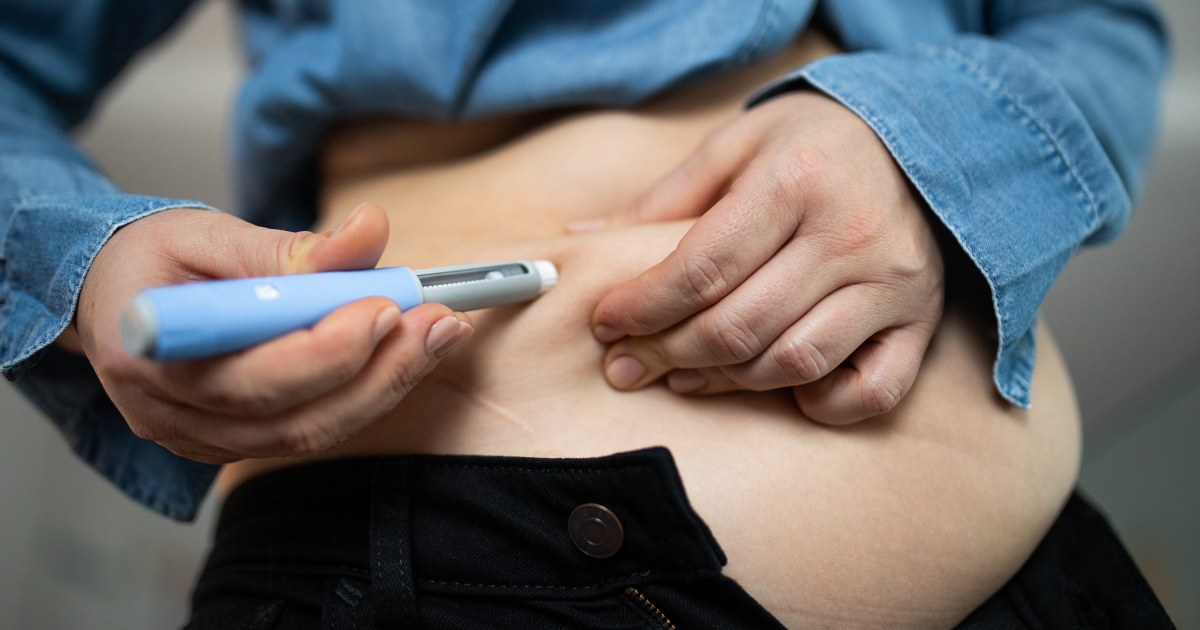
Within 24 hours of injecting the first dose of a weight loss medication she received following a visit with a telehealth doctor, Karleigh McClain was admitted to the hospital, she said.
Subscribe to read this story ad-free
Get unlimited access to ad-free articles and exclusive content.

The 31-year-old compliance consultant from Hendersonville, Tennessee, said she couldn’t stop vomiting.
“Sunday morning, it all hits,” McClain recalled, as she described what happened that weekend in January. “I can’t keep anything down.”
McClain said she thought the dosage the telehealth company had prescribed seemed too high. She tried to contact her doctor, but when she didn’t get an immediate response, she said she called the company and a “care team” representative confirmed the instructions — which said to inject 2.21 milligrams of the semaglutide medication once a week — were correct.
It turned out, however, that was nearly nine times the amount patients are typically told to take for their first dose.
Nearly a month after she was diagnosed with an overdose, McClain said she was “still dealing with the residual side effects,” including an elevated heart rate and vision problems she felt were tied to the medication.

Most patients who have taken a GLP-1 received their prescription through a primary care doctor or a specialist, KFF polling data shows. But as the uptake of telehealth has grown substantially since the start of the covid pandemic, McClain is one of millions of Americans who have used online companies to meet a variety of their medical needs.
Many of the companies have started offering GLP-1 medications for weight loss as demand for these drugs has exploded. But certain medication errors tied to GLP-1s have exploded too, according to a KFF Health News review of Food and Drug Administration data, and physicians and telemedicine researchers worry that adverse experiences tied to telehealth companies are becoming more common.
Bad outcomes aren’t unique to telehealth providers or to the compounded weight loss drugs many of them offer. In fact, product liability lawsuits alleging patient injuries have been filed overwhelmingly against pharmaceutical giants Eli Lilly and Novo Nordisk, which manufacture name-brand weight loss drugs, court data shows. The drugmakers have defended their products.
However, some critics are also concerned that getting a weight loss prescription online is usually much easier than getting one through an in-person appointment. Not only do many telehealth companies write quick prescriptions for GLP-1s, but they often sell the medications, too, allowing patients to bypass in-person pharmacy visits. This one-stop shopping isn’t necessarily a good thing, according to critics who say some telehealth providers are writing prescriptions for people who should not be taking GLP-1s and then providing little or no follow-up care.
“It gives a black eye to telemedicine,” said Elizabeth Krupinski, an experimental psychologist at Emory University who has conducted research on the effectiveness of telehealth.
Telemedicine stands to benefit “so many people,” Krupinski said, particularly when the technology is integrated within a larger healthcare system. That way, patients benefit from the convenience of telehealth while maintaining a connection with their in-person providers.
But some telehealth companies are marketing GLP-1s as an easy way to lose weight — sometimes with the help of paid celebrity endorsements — without emphasizing the importance of healthy eating and exercise, she said.
They may be following the letter of the law, Krupinski said. But writing prescriptions while skimping on care “is not in the Hippocratic oath.”
A “perfect storm”
Starting around 2020, many states loosened restrictions on telehealth, which allowed online companies to proliferate. This helped accommodate patients who could not, or chose not to, be seen in person at the height of covid transmission.
Expanded telehealth access was also intended to lower barriers in rural communities, as well as mitigate doctor and nurse shortages. In many places, telehealth doctors and nurses are legally allowed to treat patients across state lines. But the way telemedicine is practiced varies widely, and state laws largely dictate rules that telehealth providers must follow.
Some companies, such as Mochi Health, require patients to meet virtually with a provider, such as a doctor, nurse practitioner, or physician assistant, before they can get a GLP-1 prescription.
But others, including Ro, sometimes require nothing more of patients than an “asynchronous” evaluation, which does not include a live conversation with a healthcare provider. During this type of evaluation, customers are typically asked to fill out an intake form and answer a medical history questionnaire before they are evaluated for a prescription. Ro requires a follow-up conversation in real time when required by state law, said Nicholas Samonas, a spokesperson for the company.
Some medical experts are concerned that virtual care may be insufficient for prescribing weight loss drugs.
Patients with a history of pancreatitis, for example, should be counseled about potential complications, medical studies show. The same goes for people with a condition called gastroparesis, which affects stomach nerves and muscles, and those susceptible to medullary thyroid cancer.
Some patients may also benefit from blood work or muscle mass screening before starting a GLP-1.
But not all telehealth companies are adequately evaluating patients before writing prescriptions, said Marc-Andre Cornier, an endocrinologist at the Medical University of South Carolina and the immediate past president of The Obesity Society.
When it comes to parsing the good from the bad, “whose job is it to police that?” he asked. The problem, he said, is there aren’t criteria written by a government agency or a medical society to determine which providers are treating patients appropriately and which aren’t.
While the first GLP-1 was approved by the FDA more than 20 years ago, to treat Type 2 diabetes, the use of these drugs took off in 2021 when Novo Nordisk received approval for a semaglutide drug to treat obesity, with the brand name Wegovy. In a 2025 KFF poll, nearly 1 in 5 adults said they had taken a GLP-1.
In a recent paper in The New England Journal of Medicine, physician Amanda Banks noted that the proportion of GLP-1 prescriptions written for people who were not diabetic, obese, or overweight increased from 4.5% in 2018 to 17% in 2023.
In the paper, Banks called it “troubling” how easy it is to obtain a prescription for weight loss drugs and worried they might exacerbate existing eating disorders or cause new cases, including of anorexia.
Cornier, who has received compensation from Novo Nordisk for serving as a consultant, echoed some of Banks’ concerns. “It’s not just filling out a form online and then having some random healthcare provider sign off on it,” he said. “There are concerns with some of these online programs that there’s not a proper evaluation, there’s not a baseline, and there’s not proper supervision.”
The American Telemedicine Association, which advocates for the expansion of “digitally enabled care,” has not addressed how telehealth providers prescribe GLP-1s, spokesperson Gina Cella said.
“This is a bit out of our scope,” Cella said, when asked if the association had addressed the topic of telehealth providers and GLP-1 prescriptions.
The lack of clarity makes choosing a company potentially confusing for patients, and the medical profession is partly to blame, said Jamy Ard, an obesity doctor and researcher at Wake Forest University School of Medicine in Winston-Salem, North Carolina.
Doctors have historically done a bad job counseling patients about weight loss, and many people aren’t comfortable talking to their primary care doctor about it, Ard said. Patients think, “Why would I go to my doctor and have them say, ‘Eat less and move more,’ when I have heard that a million times and I don’t want to have that lecture again?” Ard said.
This problem, combined with past shortages of name-brand versions of GLP-1s, such as Ozempic, Mounjaro, and Trulicity, has created a “perfect storm” for telehealth companies to flourish, said Ard, who has received support from pharmaceutical and telehealth companies.
While some telehealth companies prescribe only name-brand weight loss drugs, many also offer cheaper, compounded versions. They act as intermediaries between customers and mail-order compounding pharmacies, which create GLP-1s by mixing active ingredients, such as semaglutide, with additives. The ingredients for compounded drugs are commonly sourced from overseas suppliers, and the formulations are not reviewed by the FDA for safety.
The environment is “very much uncontrolled and poorly, if at all, regulated,” Ard said. “There is just no standard of care.”
Emily Hilliard, a spokesperson for the Department of Health and Human Services, said that compounded drugs “should only be used in patients whose medical needs cannot be met by an FDA-approved drug.”
Hilliard said the agency urges “consumers to be vigilant and know the source of their medicine.”
Understanding the risks
While weight loss drugs have helped millions of people lose weight, they’re not without risk, the data shows.
A KFF Health News data analysis of the FDA’s Adverse Event Monitoring System found that medication errors made by providers or patients with popular weight loss drugs exploded from just over 2,000 reports in 2020 to over 25,000 in 2025. Those self-reported events involved semaglutide, tirzepatide, dulaglutide, and liraglutide, the generic names for leading GLP-1s.
Among frequent issues cited in the adverse event reports were administration of an extra or incorrect dose, issues with communication about a product, and prescribing errors.
Since 2019, the National Poison Data System has fielded a nearly 1,500% increase in calls related to overdoses or side effects from injectable weight loss drugs. The data does not distinguish between overdoses tied to a telehealth prescription and those stemming from an in-person medical appointment, but it is a reflection of how prevalent these drugs have become.
Yet data on potential medication errors and adverse reactions to GLP-1 medications is incomplete, because many issues are never reported to federal officials.
For example, in a March 5 warning letter, the FDA accused drugmaker Novo Nordisk, the maker of Wegovy and Ozempic, of failing to report some adverse events to the federal government, including suicidal ideation and death.
Nobody knows how often adverse events occur, said Kristen Nixon, a Johns Hopkins University researcher who has studied posts about weight loss drugs on Reddit, a popular online forum.
Her team analyzed hundreds of Reddit posts from 2020 through last August and identified frequent mentions of drug reactions and user errors, such as patients’ not knowing how to correctly dose and inject the medication.
But another finding also stood out to her.
“Wow, there are a lot of people talking about telehealth,” Nixon recalled thinking. Reddit commenters said they got GLP-1 prescriptions from scores of telehealth platforms, Nixon found. Commenters also mentioned several dozen compounding pharmacies — often in the same posts about telehealth.
Pharmacies are typically required to counsel patients on medications they receive. But Nixon’s research found that telehealth companies often mail the medications directly, meaning patients do not need to go to a pharmacy.
“Anecdotally, it seems like the telehealth companies are really facilitating access to compounded medications,” Nixon said.
Leslie Gammon, 54, an office manager from Wendell, North Carolina, said she turned to a telehealth company called Amble Health for a weight loss drug prescription. She was given a GLP-1 after filling out an online form, she said.
Like McClain, when she received her mail-order compounded medication in late October, she thought the dosage that accompanied it seemed too high. She’d received a box of semaglutide earlier in the month with a much lower dose. But the refill she received was a stronger formulation, and the instructions told Gammon to inject three times the volume she had been taking in previous weeks.
Even though she injected slightly less than that recommended amount before bed on a Sunday evening, she woke up in the middle of the night “throwing up every 20 to 25 minutes,” she said. And it didn’t stop until Tuesday. She was eventually admitted to a hospital in Raleigh and now owes the hospital over $9,000, a medical bill shows.
Amble Health did not respond to questions for this article.
The delivery system for injectable versions of weight loss drugs is more complicated than for a pill. In its National Poison Data System alert, America’s Poison Centers noted that some people reported “accidentally taking 10-times the recommended dose due to confusing measurement units while using a syringe.”
And people who are eager to lose extra weight — before a wedding or a vacation, for example — may choose to self-administer a higher-than-recommended dose, said Arthur Caplan, a bioethics professor at New York University’s Grossman School of Medicine.
Some telehealth companies aren’t doing enough, he said, to make sure patients understand the risks or the complex delivery system associated with the injectable drugs.
“The consent is not adequate,” Caplan said. “There’s no probing to see if you understood anything.”
Cella, with the American Telemedicine Association, said the group has not addressed the difficulty of educating patients about the risks of injecting weight loss drugs. But she pointed to the association’s “Principles of Practice,” which states that telehealth business models “must put the patient first.”
Proceed with caution
Pharmaceutical companies must list potentially harmful side effects when they advertise the name-brand versions of their FDA-approved medications. Potential side effects of GLP-1s include nausea, vomiting, changes in vision, low blood sugar, and, in rare cases, thyroid cancer. Meanwhile, telehealth companies have not historically followed the same rules that drugmakers have in disclosing medication risks in advertisements. But the FDA has started cracking down on misleading drug ads.
A national shortage of weight loss medications in 2022 opened the door for compounding pharmacies to manufacture these drugs. But since the FDA declared the shortage over last year, companies that offer compounded drugs are increasingly facing legal and regulatory challenges related to their marketing tactics.
Mounjaro manufacturer Eli Lilly and other drugmakers are suing multiple telehealth companies for promoting compounded versions of their drugs. In one legal complaint, Eli Lilly alleged Mochi Health had engaged in “deceptive” business tactics. In a motion to dismiss the lawsuit last year, lawyers for Mochi Health called the complaint part of a “nationwide campaign to bolster Lilly’s profits by dictating patient care through the elimination of compounded drugs as a treatment option for weight management.” The lawsuit is ongoing.
Eli Lilly spokesperson Michael Jamison said in a written comment that telehealth companies sued by the drug manufacturer threaten “patient safety by falsely promoting supposedly ‘personalized’ compounded tirzepatide” and mislead “consumers about the safety, clinical testing, and effectiveness of their compounded knockoffs.”
Meanwhile, Novo Nordisk has filed 130 lawsuits against “entities engaged in unlawful marketing and sale of knockoff semaglutide drugs,” said Liz Skrbkova, a spokesperson for the drugmaker.
She said the company is committed to “protecting patients from unapproved knockoff drugs made with foreign, inauthentic active pharmaceutical ingredients that pose significant safety and efficacy risks.”
The Trump administration sent a flurry of warning letters in September and February to online companies such as Hims & Hers, SkinnyRx, Join Josie, and Genesis Health International. The FDA said these and other companies had made false or misleading claims related to compounded versions of weight loss drugs.
“Your claims imply that your products are the same as an FDA-approved product when they are not,” the agency’s Center for Drug Evaluation and Research wrote to Hims & Hers on Sept. 9. The Department of Health and Human Services later referred the company to the Department of Justice after it announced the launch of a $49 version of Novo Nordisk’s Wegovy pill.
When asked about the FDA warning, Abby Reisinger-Moley, a spokesperson for Hims & Hers, pointed to a March statement from the company announcing a shift away from compounded weight loss drugs. The company said in the press release that it had entered into an agreement with Novo Nordisk to sell name-brand versions.
Alex Smith, CEO of Join Josie, an online platform that helps women in menopause lose weight by prescribing GLP-1s, said his company also made changes in response to an FDA letter, to include removing Join Josie’s name from medication vials. “Which I agree with,” Smith said, “because you don’t want patients thinking you’re the compounding pharmacy.”
SkinnyRx and Genesis Health International did not respond to requests for comment.
But these warnings aren’t the first time the federal government has stepped in to ensure that telemedicine is being used appropriately, said Mei Wa Kwong, executive director of the Center for Connected Health Policy.
Prior cases involved attention-deficit/hyperactivity disorder medications and other controlled substances prescribed by telehealth providers, she said. While those drugs pose more risk to patients than GLP-1s, the companies were also accused of improperly screening potential customers.
The onus still falls on consumers to research companies before signing up for their services, Kwong said.
“Always approach anything on the internet with a hint of skepticism,” Kwong said.
‘Keeps getting worse’
McClain, the Tennessee woman hospitalized this year after a GLP-1 overdose, said she lost 50 pounds a few years ago by taking a name-brand GLP-1 prescribed by her doctor.
At the time, the medication was covered by her health insurance. This year, when she was ready to take a GLP-1 again following a pregnancy, the drug was no longer covered for weight loss.
To save money by obtaining a cheaper, compounded GLP-1, McClain signed up for Mochi Health after doing her own research. “That was just the most affordable option,” she said.
But within hours of her first dose, she said, she found herself on the phone with poison control.
After her overdose, McClain said, she spoke to a clinical director at Mochi Health, once by phone but mostly via email, about her lingering symptoms before communication paused.
David Pilip, a spokesperson for Mochi Health, said in a statement that the company would not discuss individual patients due to privacy obligations. But he said adverse events are “immediately flagged” and “investigated with extreme precision.”
“Mochi Health takes patient safety extremely seriously,” Pilip wrote in an email. “We promptly initiated a review and have been in direct and ongoing communication with the patient to reach a resolution. We remain committed to doing so.”
McClain anticipates her healthcare bills related to the hospital stay will total at least $900. She said that to get the $159 refund for her three-month membership and reimbursement for the hospital expenses, she has been asked to sign a document saying she won’t take legal action against the company. Her experience, she said, “just keeps getting worse.”
KFF Health News is a national newsroom that produces in-depth journalism about health issues.
Comments are closed, but trackbacks and pingbacks are open.