
Regional concern over the Ebola outbreak in the Democratic Republic of the Congo intensified Saturday as Uganda confirmed three new cases, while neighboring countries stepped up monitoring measures amid fears of cross-border spread.
Subscribe to read this story ad-free
Get unlimited access to ad-free articles and exclusive content.

Health authorities and aid agencies across east and southern Africa are reinforcing screening at key crossings and scaling up preparedness planning, as officials warn that ongoing cross-border movement continues to present a risk of further cases.
Officials have also expanded community awareness campaigns alongside border screening and local surveillance measures, urging residents to report symptoms quickly and follow hygiene guidance aimed at limiting transmission.
Uganda, which borders the epicenter of the outbreak in Congo, urged the public to “remain calm, vigilant, and continue observing all recommended preventive measures” as its health ministry announced three new cases in the country, bringing the total number to five.

A Ugandan driver who transported the country’s first confirmed case was infected and is currently receiving treatment, it said, alongside a health worker who was taking care of the same patient. A Congolese woman who has returned to her home country but was treated in Uganda has also tested positive.
As of Friday, the World Health Organization has reported 750 cases and 177 deaths connected to the outbreak, which is the 17th time the deadly virus has emerged in Congo.
Ebola wreaks havoc on the body by attacking the immune system, organs and blood vessels. It causes severe inflammation and widespread damage, leading to multiorgan failure.
Most recent Ebola outbreaks have been detected quickly, after a handful of cases. But this outbreak went undetected, likely for weeks, experts say. The standard Ebola tests were coming back negative, even as patients were dying, due to the rare strain of the virus circulating.
One of the major hot spots in eastern Congo is an area marked by insecurity, population movement and cross-border links with Uganda, which have driven concerns about onward transmission into neighboring countries.
“Given Uganda’s proximity to the epicenters and strong cross-border linkages that include trading movement for other economic activities and direct flights, the risk of further importation remains high,” Diana Atwine, leader of Uganda’s National Task Force on Ebola, told reporters on Thursday.
She said Uganda was “temporarily suspending all cultural celebrations, commemorations that attract big numbers of participants,” along the Congo-Uganda border, as well as halting key transportation routes, including all public transportation between Congo and Uganda for four weeks.

The measures announced across the region reflect rising concern among health authorities about cross-border spread, with countries stepping up surveillance, screening and entry controls in response to developments in eastern Congo.
The threat level in Zambia, which shares a border of over 1,000 miles with Congo, is “very high,” said Sody Munsaka, a professor and scientist studying neuroimmune and infectious diseases at the University of Zambia.
The border is “very, very porous,” with “very few formal entry points or legal entry points,” he said. Instead, he added, there are areas “where people can just walk up” and cross.
There is also a risk that exposed individuals may cross borders before showing symptoms, he said, with Ebola’s incubation period of “about 21 days” leading to delayed detection.
The Zambia Red Cross Society told NBC News on Saturday that the organization was working with the Zambian government on preparedness efforts, including community awareness and sensitization along border areas and support for community surveillance.
Spokesperson Esther Phiri described the situation as “a high alert concern” and pointed to ongoing community messaging on prevention, including hygiene measures and reporting suspected cases, alongside the use of fever-detection equipment at entry points similar to tools deployed during Covid.
Rwanda, to the east of Congo, said Friday that the country remained “open, safe and prepared, while announcing “enhanced level entry control measures.”
Its health ministry said in a statement that all foreign nationals who had transited through Congo within the last 30 days would be denied entry to Rwanda, while Rwandan residents who had visited Congo would be subject to “mandatory quarantine procedures.”
Annonciata Byukusenge, a Rwandan journalist, told NBC News that prevention measures are being reinforced in public spaces, describing steps similar to those used during Covid.
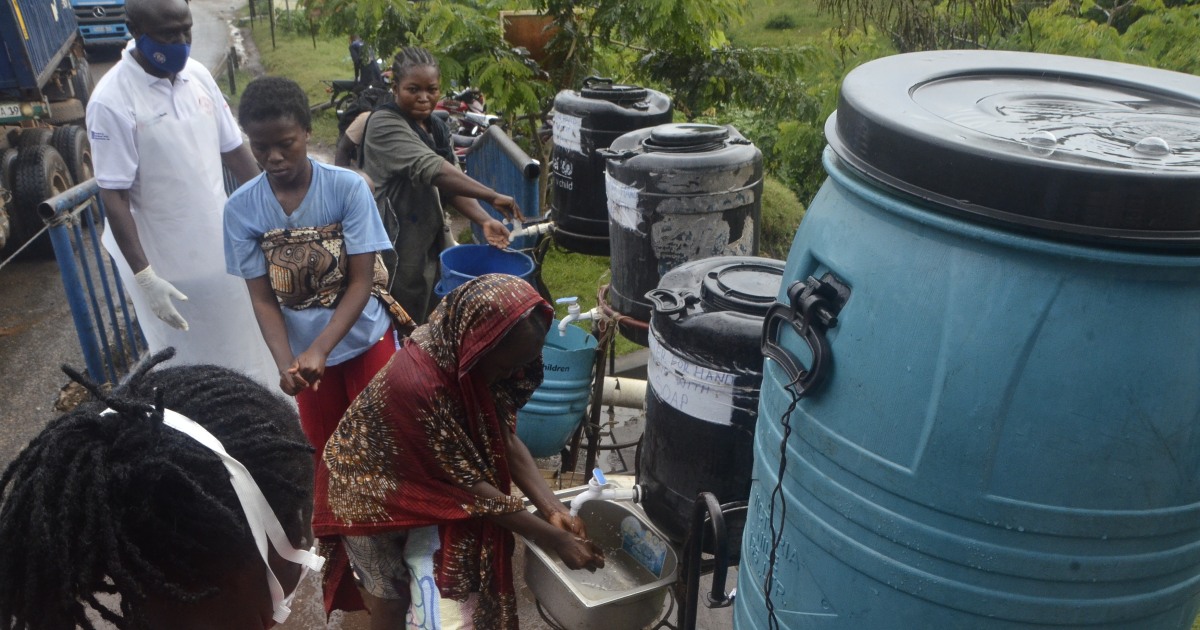
She said markets and major transportation hubs such as churches and schools have “clean water and soap at the entrance to wash hands for everyone who enters.”

Farther afield, Malawi, 300 miles from Congo’s eastern border, has declared the outbreak a “public health concern” and is intensifying screening at airports and border points, as well as training healthcare workers in Ebola case detection, its health ministry said.
Mavuto Shanto Thomas, a spokesperson for the ministry, said that the scare was “not new to the country.”
“We have plans, which the team has reviewed, and the contingency plan is in motion,” he said.

FORSUBSCRIBERS

How U.S. cuts to foreign aid are impacting Ebola outbreak
04:12
Meanwhile, health officials say response efforts in Congo are being challenged by conditions in affected areas, where insecurity and access constraints are complicating containment and surveillance operations.
On Thursday, protesters in the town of Rwampara set fire to hospital tents after they weren’t allowed to take back the body of a loved one for burial. Bodies can be infectious for several days after death, and touching and preparing them for traditional funerals have been driving factors for transmission.
Doctors Without Borders said Sunday that the tent was empty at the time and no one was injured, but that 18 patients with suspected Ebola left the facility during the incident.
“Right now, diagnostics are extremely limited, making it difficult to rapidly confirm cases, ensure safe isolation, and provide timely care for patients,” the statement said.
The U.S. State Department this week committed to mobilizing an initial $23 million in foreign assistance for response efforts.
“It has all the potential of being the worst outbreak,” said Ky Luu, president and chief operations officer for International Medical Corps, a nonprofit humanitarian organization that has already deployed four rapid response teams in the region.
Comments are closed, but trackbacks and pingbacks are open.