
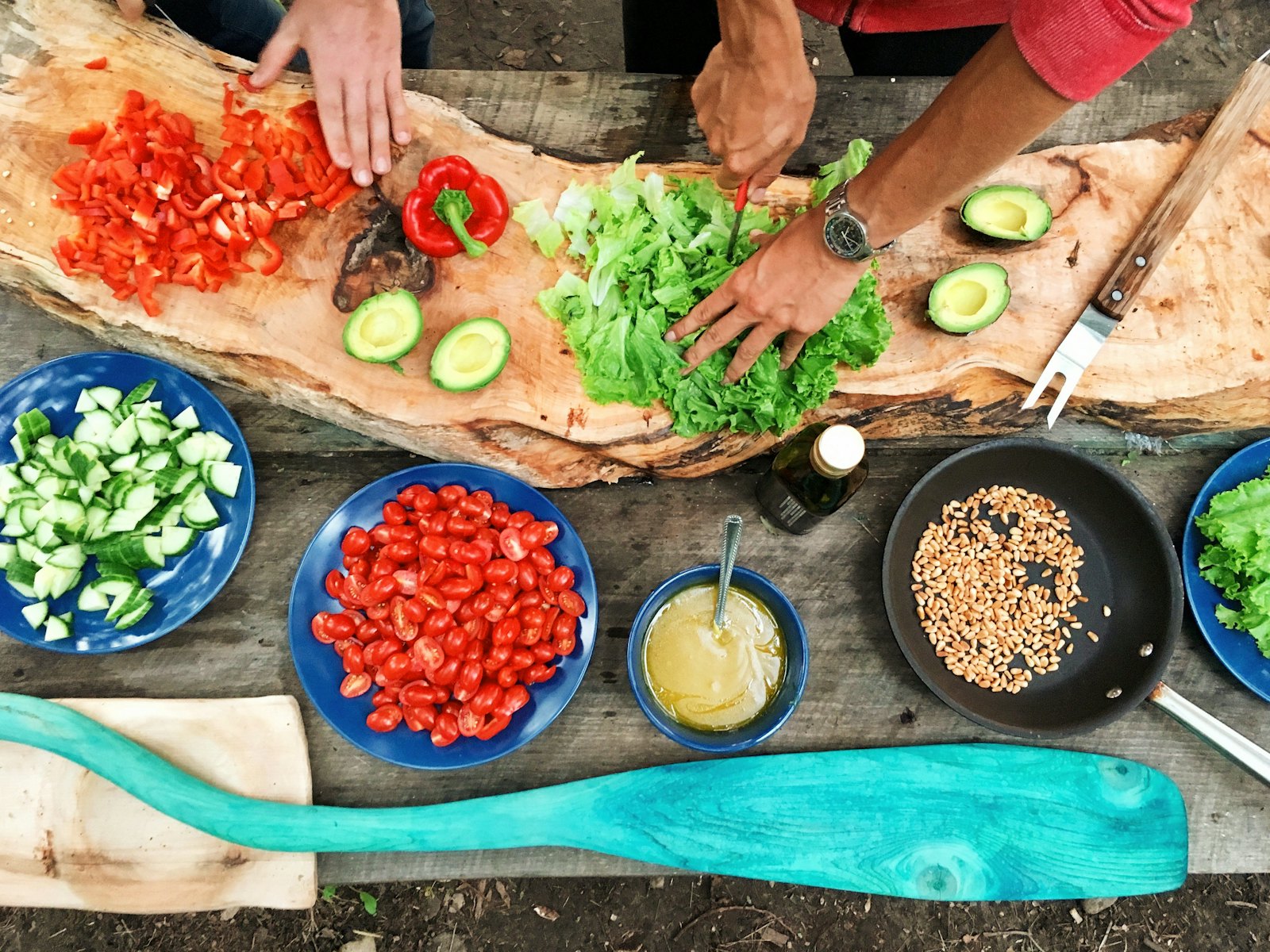
It is 96 degrees. You just got home from the market with more food than sense. Two pounds of zucchini, a bag of shishitos, a flat of peaches, corn that was picked this morning, and a fistful of basil that is already wilting in the car.
Nobody is turning on an oven today. Nobody is standing over a grill in this heat either.
So here is the method I use every summer week, and it starts and ends with one pan.
What the One Pan Summer Method Actually Is
The one pan summer method is simple: you cook the entire market haul in a single skillet, in sequence, the same day you buy it, and you eat off it for three days.
Not meal prep in the sad plastic container sense. No portioning. No labels. You blister everything at medium heat in the order that makes sense, you salt it, you pile it in a bowl, and it goes in the fridge. Breakfast is that bowl with an egg. Lunch is that bowl cold with olive oil. Dinner is that bowl next to something you seared in the same pan.
Twenty minutes of work buys three days of eating. That is the whole trade.
Why Summer Cooking Ruins Cheap Pans
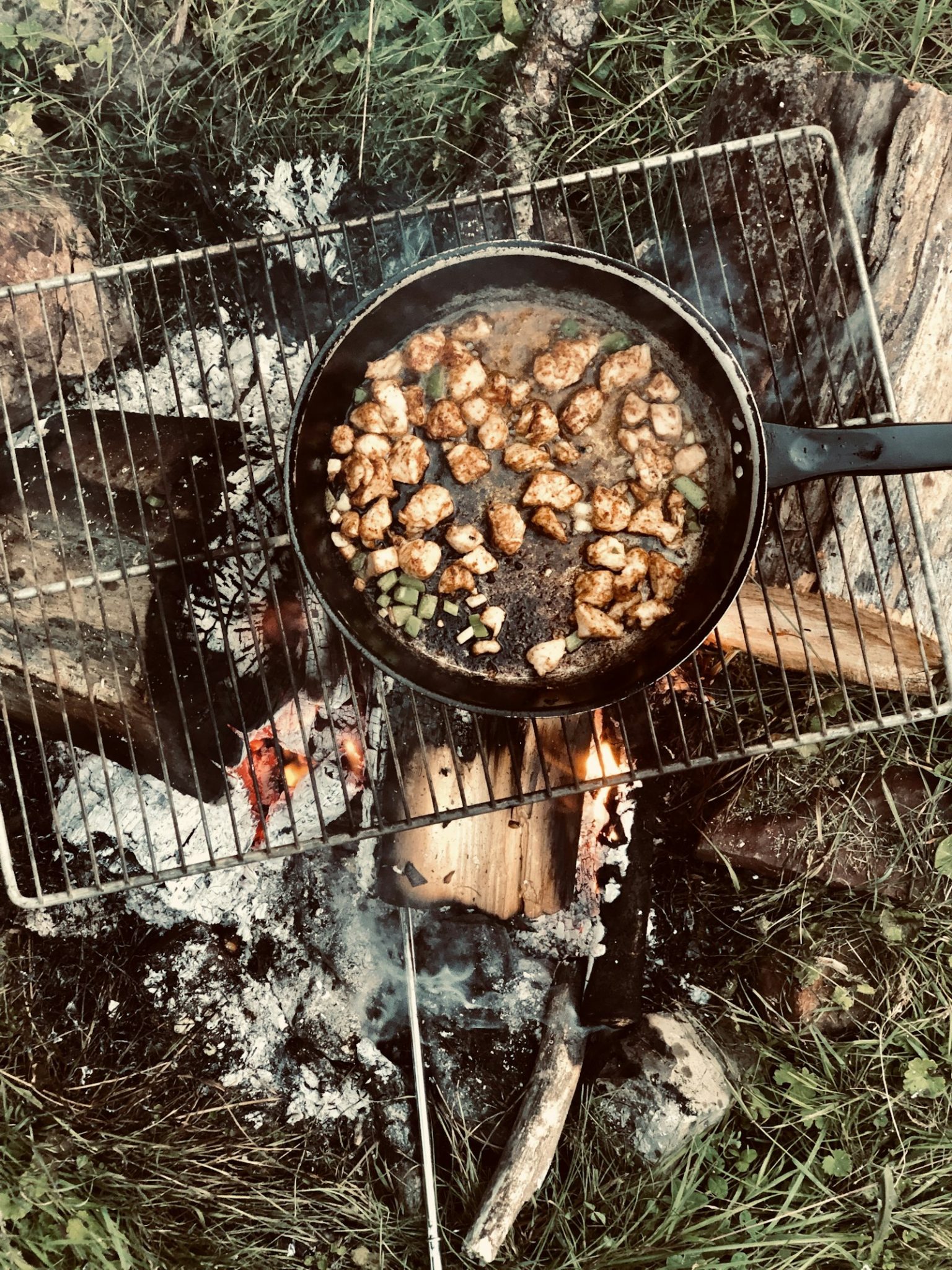
Summer cooking is short, hot, and constant, which is exactly the pattern that destroys a coated pan and puts what is left of that coating into your food.
Look at what your skillet is wearing. Almost every conventional slick surface is polytetrafluoroethylene, sold to you as Teflon, and it sits inside the PFAS category that earned the forever chemical nickname for refusing to ever leave. The NRDC has written about what that surface does once a burner pushes it past 500 degrees. Two minutes with nothing in the skillet gets you there.
And you will overheat a pan in summer. Not because you are careless, but because summer cooking is a series of hard fast sears with a pan that never fully cools between them. Blister the peppers, wipe it, sear the fish, wipe it, hit the peaches. The pan is running hot for twenty straight minutes.
Then there is the metal spatula problem. Chemistry reporters at C&EN have covered how a gouge or a hot spot snaps the polymer apart, and once it snaps, fragments travel. Meanwhile Consumer Reports went shopping and tested what the boxes promised. Their verdict pointed toward ceramic for anyone who wants slick without the fluoropolymer.
Ignore the PFOA free sticker. That compound left the factory more than a decade back. Read it as marketing, not as chemistry.
The Pan I Use
Every round of this runs on Caraway Home in my kitchen, and the reason is refreshingly dull. Smooth mineral ceramic over an aluminum body. No fluoropolymer. No heavy metals. Nothing manufactured standing between a hot burner and a peach.
Two things make it work for this specific method.
The aluminum core spreads heat evenly, so you can run the whole session at medium instead of cranking to high. Even heat is what lets you sear at a lower dial and still get a real crust. Lower dial means you never get near the temperature where any coating starts having opinions, and your kitchen stays livable in August.
The cleanup is the other half. Warm water and a soft sponge, ninety seconds, done. That matters more than it sounds. The reason people abandon cooking in July is not the cooking. It is the sink at the end of it. Make the cleanup trivial and the habit survives the season.
What I respect is that they walked away from the whole chemical family rather than swapping one banned ingredient for its cousin and printing a new label. The factories they use carry BSCI and SMETA certification. The box shows up as recycled cardboard, zero single use plastic, with a cork trivet you could compost.
Code JOSH takes 10% off, or use this link and it is already applied.
The Sequence: How to Run the Whole Haul in Twenty Minutes
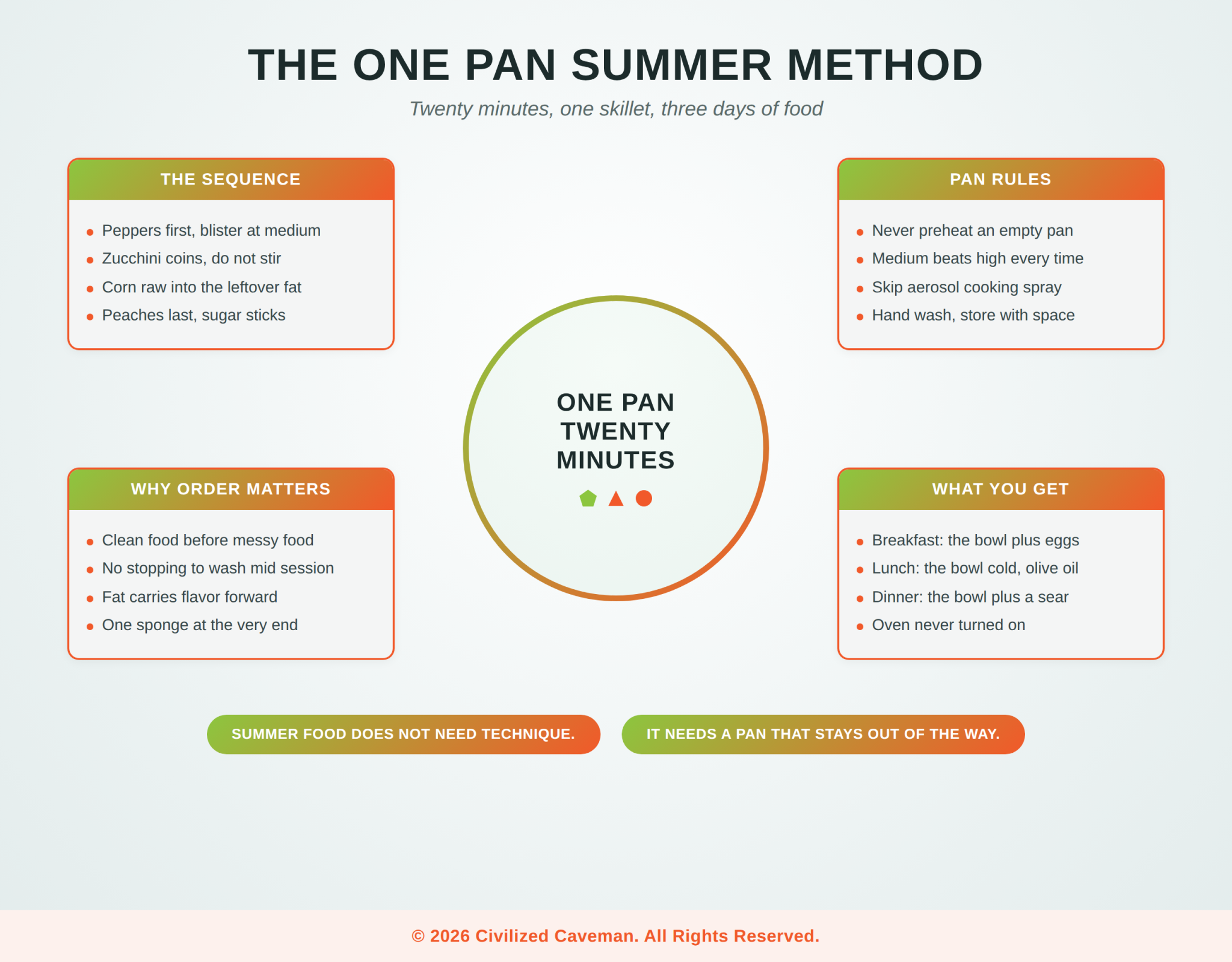
Order matters. You are cooking from cleanest to messiest so you never have to stop and wash mid session.
1. Peppers and green things first, at medium
Olive oil, then shishitos or padrons spread flat with room between them. Now do nothing. Stillness is the technique. They want two minutes a side to swell, char, and give up. Salt them, hit them with lemon, tip them into the bowl.
One in ten shishitos is genuinely spicy. That is the point of the pepper. Roulette is a feature.
2. Zucchini, coins not chunks
Coins beat chunks because coins put more zucchini against hot metal. One layer, medium, hands off for a full two minutes. Do that and you get color. Stir early and you get gray sludge. There is no third outcome.
Garlic goes in for the last thirty seconds only. Garlic in early is burnt garlic. Lemon zest goes on after the pan is off the heat.
3. Corn straight off the cob, into the fat
Shave the kernels off the cob raw and drop them into whatever fat the last round left behind. Half a minute. Done. A July cob arrives sweet, and every extra minute over heat is a withdrawal from that account.
Torn basil at the end, off the heat, so it perfumes instead of turning black.
4. Protein, if you want it, in the same pan
Lay wild salmon face up, skin against ghee, and then keep your hands off it. The fish will tell you when to turn it by letting go of the metal without a fight. Stuck means wait. Every torn fillet in history came from somebody who could not wait.
Pastured chicken thighs work the same way. Skin down, medium, patience. Ten minutes and you are done.
5. Peaches last, because sugar
Split them, face down in ghee, and walk away while the sugars turn dark and sticky against the metal. Dust cinnamon over the top once they come off. Nothing else goes in. No honey, no pastry, no thickener. July grew the whole dessert and your only contribution was a burner set correctly.
Do this one last, because caramelized peach sugar is the only thing in this sequence that actually requires the sponge.
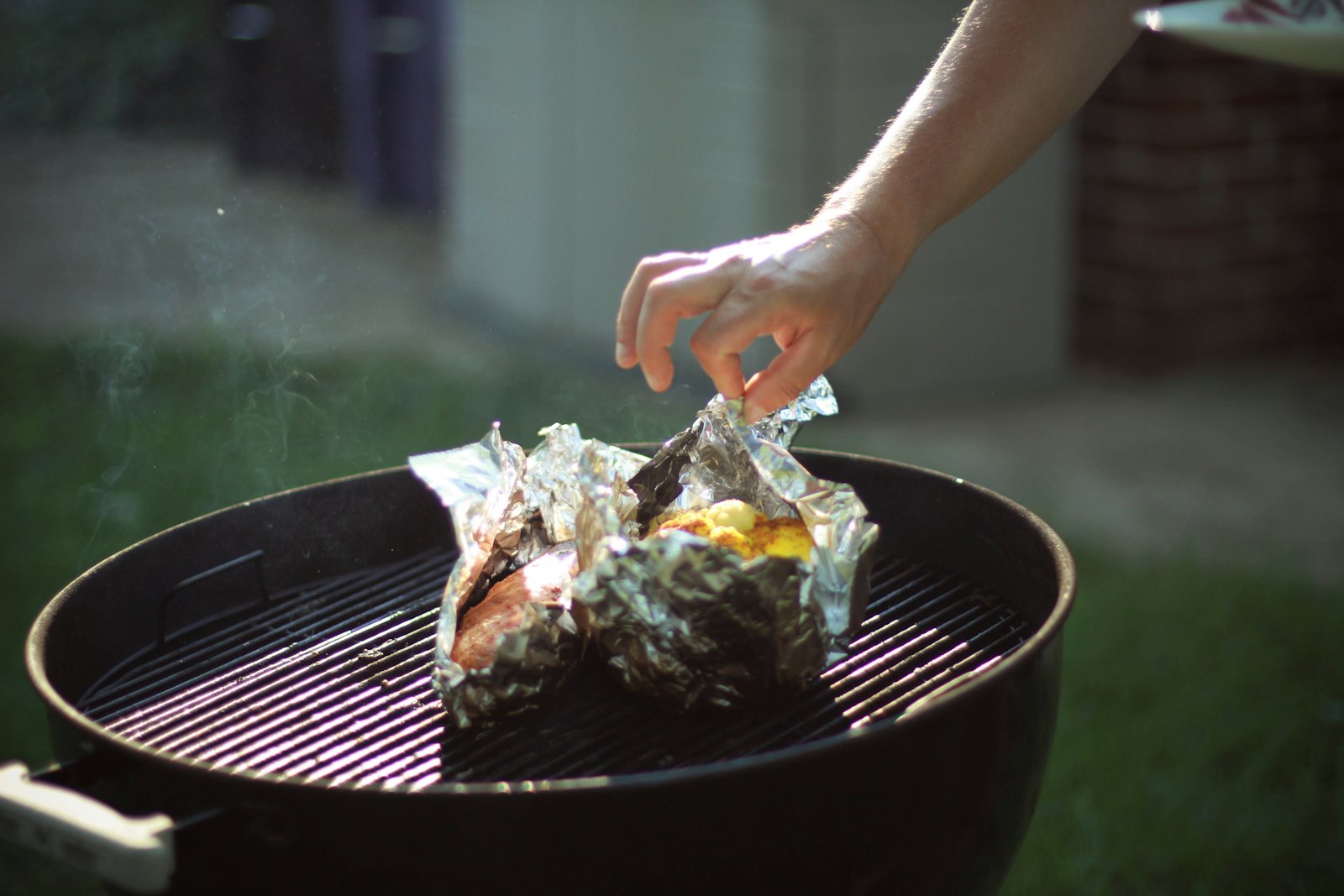
Grill Less Than You Think
I am not taking your grill. Saturday over live fire with people you love is not a nutrition decision, it is a ritual, and rituals matter.
Just know what you are buying on the other five days. The NCI keeps a fact sheet on the two compound families that show up in charred muscle meat, one born from amino acids meeting extreme temperature, the other riding smoke back onto your steak after the drippings catch. A skillet produces neither, because nothing falls and nothing catches.
Grill because you want to. Pan sear because it is Tuesday.
Four Rules That Keep Any Pan Alive
These four habits will double the life of whatever cookware you own, ceramic or otherwise.
Never preheat empty. Free to follow, expensive to ignore. Oil hits the metal before the burner gets ambitious, and the food follows close behind. Give the heat something to sink into. Bare metal has no job to do except climb.
Medium is the answer. Cranking the dial is a workaround for cookware that cannot move energy across itself. Give it a core that can, and the crust shows up anyway, quieter, without fogging up a room that is already unpleasant in August.
Skip aerosol cooking spray. The propellants leave a polymerized film that builds up over time and kills the release properties of ceramic. Use real fat. Ghee, olive oil, tallow, avocado oil. Pour it.
Hand wash and store with space. Warm soapy water, soft sponge, and do not stack pans bare against each other. Ceramic rewards gentleness. So does most of life.
What You Actually End Up With
By the time the pan cools you have a bowl of blistered peppers, browned zucchini, sweet corn with basil, a piece of protein, and caramelized peaches. One pan in the sink. Twenty minutes on the clock. The oven never turned on and the kitchen never went above tolerable.
Breakfast tomorrow is that bowl with two eggs cracked into a warm pan. Lunch is it cold with more olive oil and flaky salt. Dinner is it beside whatever you sear next.
Summer food does not need technique. It needs a pan that stays out of the way.
Get the Pan
Caraway Home cookware is what I cook this method on all summer. Ceramic, not synthetics. Zero Teflon. Even heat, ninety second cleanup, and it looks good enough to leave on the counter, which is the real reason it gets used.
Save 10 percent with code JOSH at https://joshtrent.com/caraway
Josh Trent is the host of the Wellness + Wisdom Podcast and the founder of Wellness + Wisdom. He lives in Austin with his wife Carrie, daughter Nayah, and son Novah, and cooks most of the family’s summer food in one pan on medium heat.
Want to unlock greater wellness?
Listen to our friends over at the Wellness + Wisdom Podcast to unlock your best self with Dr. John Lieurance; Founder of MitoZen; creators of the ZEN Spray and Lumetol Blue™ Bars with Methylene Blue.
Comments are closed, but trackbacks and pingbacks are open.