
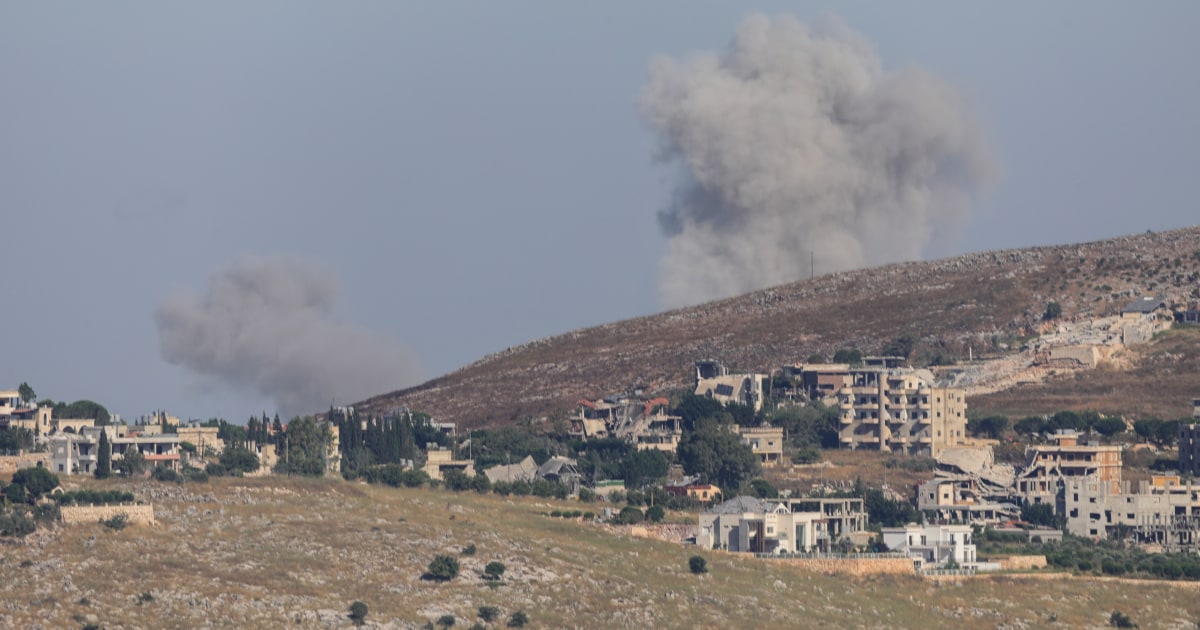
Israeli strikes across southern Lebanon on Saturday morning killed at least 16 people, including two children, according to Lebanese civil defense and media, one day after the US said Israel and Hezbollah had implemented a fresh ceasefire at President Donald Trump’s request.
Subscribe to read this story ad-free
Get unlimited access to ad-free articles and exclusive content.

Israel hit a series of towns across Lebanon’s south early Saturday, Lebanese news agency NNA reported. An airstrike on the town of Arabsalim reportedly killed three people, the agency reported, and a drone strike on the town of Deir al-Zahrani reportedly killed one person. At least seven people remain trapped under the rubble, it said. Lebanon’s army said a soldier was killed between Kfar Rumman and Nabatieh in southern Lebanon.
A statement from the Israel Defense Forces said Hezbollah had breached the ceasefire and “launched more than 50 projectiles toward IDF soldiers operating in southern Lebanon” overnight, and that Israel had attacked what it described as Hezbollah targets in response. “The IDF remains committed to the ceasefire agreement,” the statement said.
Hezbollah, an Iran-backed militant group, said it had “adhered to the ceasefire since Friday evening,” accusing Israel of making “false claims to justify its violation of the ceasefire.”
The fresh attacks come as Israel’s continued military bombardment threatens to derail the fragile US peace talks with Iranand just one day after Trump said he had asked Israel to stop its strikes on Lebanon and Israel’s ambassador to the US said his country would cease “offensive operations.”

Trump’s special envoy Steve Witkoff and son-in-law Jared Kushner were in Switzerland on Saturday for talks, Vice President JD Vance told Fox News.
Officials from Tehran and Washington were set to meet in Switzerland on Friday to begin 60 days of negotiations on a “final” deal, but those talks were postponed. The negotiations are meant to resolve some of the thorniest issues in the deal that are yet to be agreed upon, including Iran’s nuclear program.
Also on Saturday, key mediator Pakistan’s interior minister, Mohsin Naqvi was in Tehran to meet with Iran’s Foreign Minister Abbas Araghchi, according to the semi-official Iranian Students’ News Agency.
Baghaei had earlier said that talks with the mediator, Pakistan, were ongoing as part of the next phase of negotiations.
The memorandum of understandingsigned by the US and Iran this week committed to an immediate end to all fighting, including in Lebanon. Although Israel was not a direct party to that deal, Iran has warned that it would consider Israeli strikes a violation of the terms.
US spy agencies believe that Israel will likely continue to launch attacks against the militant group in Lebanon, potentially jeopardizing the tentative peace deal, according to a source with knowledge of the intelligence assessments.

Israel’s continued strikes on Lebanon come amid a widening rift between the Trump administration and Prime Minister Benjamin Netanyahu and his far-right allies, who have criticized the deal as not in Israel’s interest and agitated for more strikes on Lebanon. Netanyahu is also facing a crucial election in October and will likely need the support of the Israeli far right to stay in power.
“Netanyahu is in a challenging political spot,” Jonathan Panikoff, a former career intelligence officer now at the Atlantic Council think tank, told NBC News in an email. “When combined with the broad view that Iran has emerged strategically stronger, Netanyahu finds himself trapped.”
Netanyahu’s vow to occupy southern Lebanon and Israel’s decision to strike both Iran and Lebanon while an initial deal was being hammered out of repeatedly delayed talks, fueling frustration among US officials.
Vice President JD Vance hit out at Israeli officials on Thursday, saying that Israel does not appreciate American support.
01:08
US-Iran talks postponed as Vance cancels Switzerland trip
00:0000:00
Despite the rising tensions over Lebanon, there has been a steady flow of ships passing through the Strait of Hormuz since the deal was signed. Industry experts have warned, however, that it could it takes weeks for the shipping traffic to fully normalizegiven that the threat of mines still needs to be cleared.
IDF spokesperson Brig. Gen. Effie Defrin said Friday that Israeli forces will continue to operate in southern Lebanon and “do whatever is necessary to protect our civilians.”
Comments are closed, but trackbacks and pingbacks are open.