
You spent an hour making the perfect paleo stir-fry. The colors were vibrant, the sizzle was real, the dish turned out exactly right. Then you filmed it on your phone, uploaded it, and got twelve views. Sound familiar?
Here’s the thing: the food isn’t the problem. The presentation is.
Recipe videos are everywhere right now, and most of them look the same. Shaky footage, flat lighting, no story, no hook. They get scrolled past in half a second because there’s nothing pulling the viewer in. The good news is that you don’t need a professional kitchen or a film crew to fix that. You just need to understand what actually makes people stop and watch.
Start With the Hook, Not the Ingredients
The first three seconds of your video decide everything.
Most food creators open with a title card or a wide shot of the ingredients laid out on a counter. That’s exactly what everyone else does, and it’s exactly why most videos get skipped.
Start with the most visually satisfying moment in yourrecipe. That might be the moment you crack an egg into a hot skillet. Or the pull shot of melted coconut butter drizzling over a bowl. Or the steam rising off a freshly plated dish. Whatever the most crave-inducing visual is, lead with that.
Your viewer’s brain makes a decision before they’ve consciously registered anything. Give it something worth stopping for.
Lighting Does More Work Than You Think
Expensive cameras don’t make food look good. Light does.
The single biggest upgrade you can make to your recipe videos costs nothing. Move to a window. Natural light from the side, not directly behind or in front of the camera, gives food that soft, dimensional look that makes it genuinely appealing on screen. Overhead lighting from a ceiling fixture is one of the most common mistakes home creators make. It flattens everything and creates unflattering shadows.
If you’re filming in the evening or your kitchen doesn’t get great natural light, a simple LED ring light or panel light positioned at a 45-degree angle from the side will do the job well. Consistent, soft light is the difference between food that looks fresh and food that looks sad.
Think in Shots, Not Just a Single Clip
One long, continuous take of you cooking a recipe is not a recipe video. It’s a home movie.
Viewers want variety. Your eye naturally wants to move between perspectives, and video is no different. Think about building a short collection of shots for every recipe:
An overhead wide shot of the ingredients before you begin. A close-up of the texture when you’re chopping, mixing, or searing. A mid-shot showing the cooking process from a natural side angle. A final beauty shot of the finished dish, plated intentionally.
Even three or four different angles stitched together will make your video feel polished and intentional. You don’t need to film everything in one sitting. Shoot the beauty shots separately if you need to. The finished product is what counts.
The Visual Story Matters as Much as the Recipe
Food content that performs well tells a story in its visuals, even without a single word.
Think about what your viewer is feeling before they cook. They’re probably hungry. They might be frustrated with their usual meals, or they’re trying to eat cleaner and need inspiration. Your video should speak to that. A warm, golden-toned edit with calm, deliberate movements communicates something completely different than a fast-cut, high-energy style.
Match your visual tone to the kind of recipe and the kind of person you’re cooking for. A post-workout paleo meal benefits from an energetic, clean edit. A cozy Sunday keto casserole wants something warmer and slower. These decisions shape whether someone saves your video or just watches it once.
Use AI Tools to Bridge the Gap Between Ideas and Execution
Not every great recipe needs to be filmed from scratch to become a compelling video.
This is where things have changed significantly for food creators. AI video tools have made it possible to turn existing photos, step-by-step images, or even written recipes into fully produced video content without needing to re-film anything. Tools like invideo let yougenerate video content from prompts or existing media, add voiceovers, sync music, and produce short-form clips ready for Instagram Reels or YouTube Shorts in a fraction of the time it would take to edit manually.
This is genuinely useful when you’ve already photographed a recipe but didn’t capture video, or when you want to repurpose an older recipe post into something that works in a video-first format. The output quality has improved to the point where it holds up well alongside traditionally filmed content, especially for short-form platforms.
It doesn’t replace filming real food. But it removes the barrier that stops a lot of creators from showing up consistently.
Audio Is the Silent Killer of Good Food Videos
No sound design, or bad sound design, kills the appetite before the food even appears.
The sizzle of a cast iron pan. The crunch of fresh vegetables. The gentle bubble of bone broth simmering. These sounds do real emotional work. They signal freshness, warmth, and real cooking. When your video has tinny audio, background noise from a TV, or just dead silence, the whole experience falls flat.
You don’t need a professional microphone setup. Get close to your food when you’re filming it. Turn off any background noise you can control. And when you’re editing, add a soft, royalty-free music bed underneath your natural cooking sounds to tie the experience together. Most editing tools have music libraries built in, or you can find free tracks on sites like Pixabay or YouTube Audio Library.
Plate It Like You Mean It
The food going into the bowl or onto the plate is the climactic moment of your video. Give it the attention it deserves.
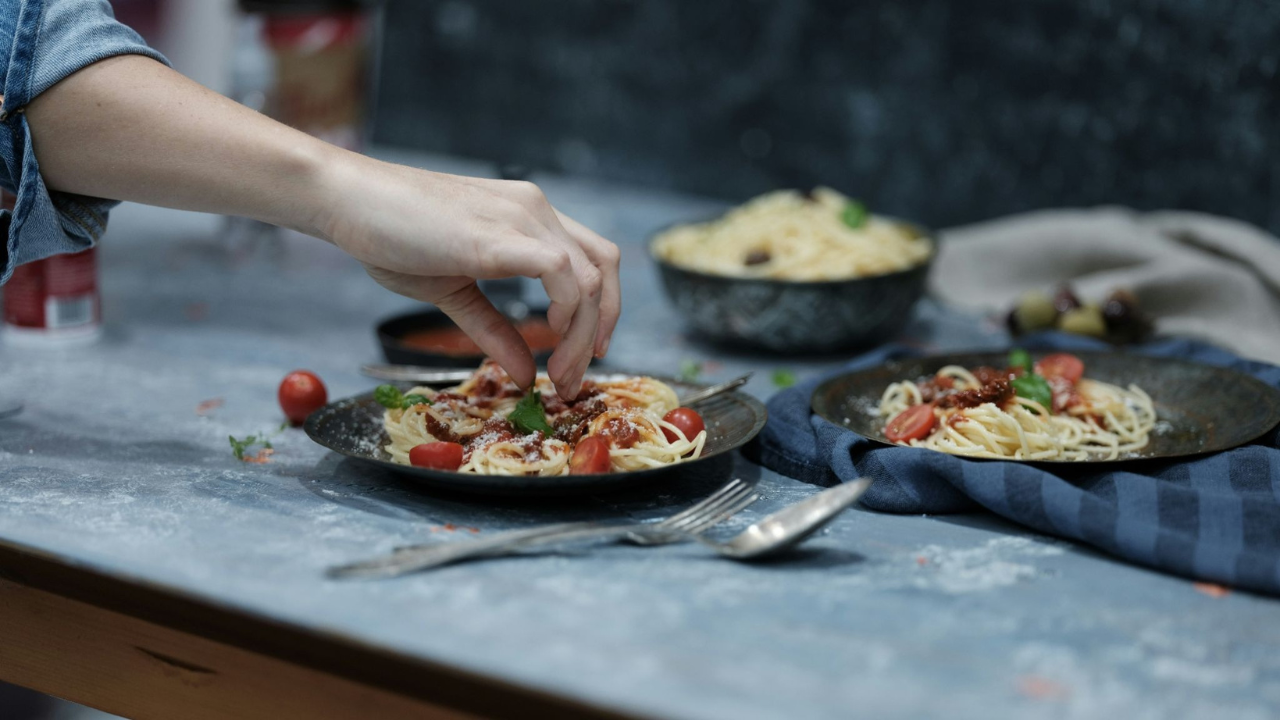
A little intentionality with plating goes a long way on camera. Use a solid-colored plate or bowl rather than something busy or patterned. Add a finishing element right before you film, a drizzle of olive oil, a few fresh herbs, a sprinkle of sea salt, something that gives the frame a focal point. Wipe the edges of the plate clean. These small details are what separate a recipe photo that makes people hungry from one that just documents the meal.
The plate is your canvas. What you’re really selling, before anyone reads a single ingredient, is the feeling of that meal.
Consistency Builds an Audience Faster Than Perfection
Here’s something worth sitting with: you don’t need every video to be perfect. You need to show up enough that people start to expect you.
The food creators who build real followings are rarely the ones with the most expensive setups. They’re the ones who post regularly, develop a recognizable style, and get a little better with each video. Your first ten videos will not be your best. That’s true for everyone. The goal is to make them, learn from them, and keep going.
Pick one recipe a week. Film it with whatever you have. Work on one thing each time: the hook, the lighting, the audio, and the plating shot. Over time, those small improvements compound into something that consistently stops the scroll.
To Wrap Up
Stunning recipe videos are not about having the best gear. They’re about understanding what your viewer sees, hears, and feels in the first few seconds of watching. Get the light right. Lead with your best shot. Tell a visual story. And use every tool available to make that easier, whether that’s a better angle, a well-plated finish, or an AI tool that turns your existing content into something shareable.
Your food is already worth watching. Give it a video that proves that.
Want to unlock greater wellness?
Listen to our friends over at the Wellness + Wisdom Podcast to unlock your best self with Dr. John Lieurance; Founder of MitoZen; creators of the ZEN Spray and Lumetol Blue™ Bars with Methylene Blue.
Comments are closed, but trackbacks and pingbacks are open.