
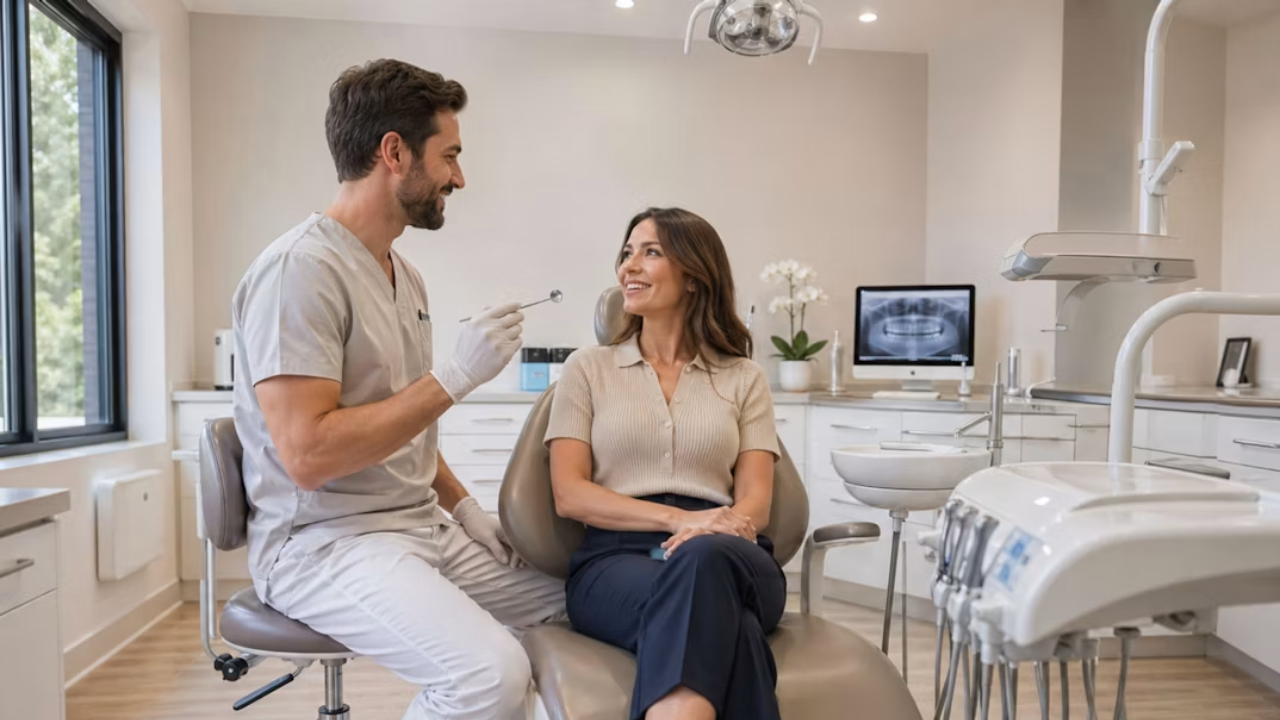
Proper oral hygiene helps control the population of harmful bacteria that cause cavities and eat away at your gums, but it can’t protect you from the effects of the acids that those bacteria produce. Similarly, it can keep plaque from building up and hardening on the surfaces of your teeth, but it can’t remove tartar once it forms. The only effective way to remove tartar is to have it scraped away with the special tools in a dentist’s office.
The Mineralization Problem Your Toothbrush Can’t Solve
Plaque is a biofilm, a structured colony of microorganisms that sticks to your tooth surfaces and reforms within hours of being disturbed. When you brush and floss regularly, you’re mechanically disrupting that biofilm before it can cause serious damage. That part works.
The problem is consistency. Any plaque that gets missed, along the gumline, between tight contacts, in the grooves of back teeth, doesn’t stay soft. Within days, oral minerals in your saliva begin to bind to it and harden it into calculus, commonly called tartar. Once that transformation happens, no toothbrush or floss thread on the market can remove it. It bonds to the tooth surface and requires the mechanical force of a professional scaler, often an ultrasonic scaler that vibrates at high frequency to break the deposits free.
Calculus isn’t just cosmetically unpleasant. It’s porous and rough, which makes it an ideal surface for new bacteria to colonize. The longer it stays, the more it acts as a permanent bacterial reservoir sitting against your gum tissue.
What’s Happening Below the Gumline
More serious problems arise where the naked eye and your toothbrush can’t reach. Anaerobic bacteria below the gumline thrive in that dark, warm, low-oxygen zone known as the gingival sulcus, basically the very small crevice in which your gum meets your tooth. This kind of bacteria creates the transformation from gingivitis (reversible swelling) to periodontitis (actual bone deterioration).
The implements at a dentist’s disposal are necessary for the removal of subgingival plaque and calculus. A regular toothbrush can’t enter those pockets. And, once the pockets deepen, oftentimes even standard floss won’t do the trick. This kind of damage will typically go unnoticed. In its initial stages, excessive pain isn’t usually prevalent. This is likely why about 47.2% of adults 30 or older have some form of periodontal disease (CDC), and don’t even know it.
Visiting adental clinic new town for bi-annual cleanings facilitates the process by allowing educated hygienists to clean your subgingival regions, take pocket measurements, and recognize recession before you need surgical intervention.
Cleanings Include Screenings You Can’t Do Yourself
A professional cleaning isn’t just to scrape off build-ups. The person doing the cleaning is also there to check out tissue color, texture, and shape. Oral cancer screenings happen at these appointments, a thorough visual and manual check of the tongue, floor of the mouth, cheeks, and throat that patients wouldn’t know to do on their own and couldn’t accurately evaluate if they did.
Early demineralization is discoverable during a clinical exam. That pre-cavity phase when enamel begins losing minerals before a hole is even present, can often be stopped with remineralization therapy or a fluoride treatment. Find it at that point and nothing has to be drilled. Miss it for another six months and you’re setting up to get a filling.
These screenings are a given for any regular preventive appointment. There’s no extra “Oh, by the way, can you also check for…?” visit needed. It’s all part of the deal.
The Systemic Inflammation link
This is the part that often surprises people. Oral health doesn’t exist in isolation from the rest of the body. Chronicgum inflammation introduces bacterial by-products into the bloodstream, and that persistent low-grade systemic inflammation is linked to cardiovascular disease, complications in blood sugar regulation, and adverse outcomes in other inflammatory conditions.
It’s not that gum disease causes heart disease in a simple cause-and-effect chain. The relationship is more complex than that. But the biological pathway is real, and it means that allowing subgingival bacterial load to build isn’t just a dental problem, it’s a choice that can impact your broader health trajectory over years and decades.
What Polishing Actually Does
Professional polishing with prophy paste isn’t cosmetic clean-up. The paste is mildly abrasive and removes extrinsic staining that brushing leaves behind, but the functional benefit is what happens to the enamel surface afterward. Polishing smooths micro-roughness on the enamel, making it physically harder for new plaque to gain a foothold and for staining agents to adhere between visits.
The result is an enamel surface that stays cleaner for longer. Your home hygiene routine becomes more effective, not less necessary, but working on a better surface.
The goal was never to replace what you do at home. Your daily routine handles the daily biofilm. Professional cleanings handle what your routine can’t, the mineralized deposits, the subgingival environment, the diagnostic layer, and the surface preparation that keeps everything working as it should. Both are necessary. Neither is optional if you’re serious about long-term health.
Want to unlock greater wellness?
Listen to our friends over at the Wellness + Wisdom Podcast to unlock your best self with Dr. John Lieurance; Founder of MitoZen; creators of the ZEN Spray and Lumetol Blue™ Bars with Methylene Blue.
Comments are closed, but trackbacks and pingbacks are open.