
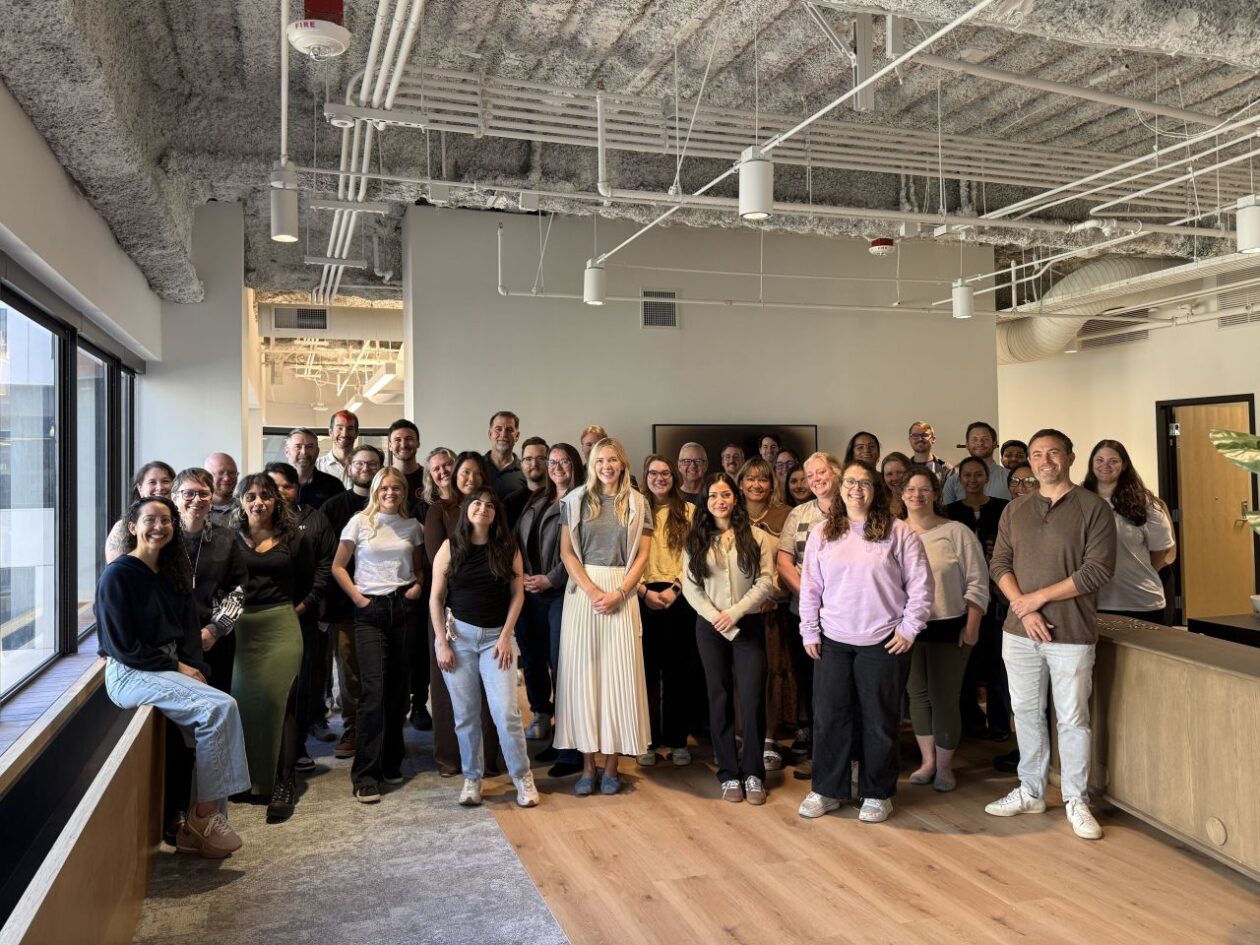
Helion Energy, in its hard-charging pursuit of fusion energy, has opened an office in downtown Seattle as its headcount swells to 800 employees.
The company already occupies five buildings in Everett, Wash., where it’s headquartered, plus operations in the central Washington town of Malaga, where Helion is building what it hopes could be the world’s first commercial fusion plant.
“Who would have thought it when we founded the company in 2013 with only five of us,” said CEO and co-founder David Kirtley in a GeekWire interview, marveling at the growth.
In June, Helion announced $465 million in new funding, bringing its total capital raised to more than $1.5 billion and its valuation to 10 times that figure.
The company is racing to master fusion, which produces energy by smashing together light atoms — essentially replicating the process that powers the sun and stars. No one has been able to create a commercially viable amount of energy from fusion here on Earth, though notable progress is being made by research institutions and private companies.
The planet is increasingly hungry for abundant, clean power as data centers gobble energy and transportation, buildings and industrial processes shift toward electrification.
That has helped spike interest in fusion, and the sector globally has raised $14.24 billion since 2021, according to the Fusion Industry Association, with multiple companies predicting they’ll succeed in producing sufficient energy in the next five to 10 years. Helion has one of the most ambitious targets, aiming to reach that mark in two years.
The company is No. 1 on the GeekWire 200, a ranked index of the Pacific Northwest’s top startups.

The company’s Seattle office is 15,631 square feet in the 8th + Olive building, in a space formerly occupied by Airbnb. The move comes as Seattle pushes to bring businesses back into its core: The city’s urban neighborhoods had an office vacancy rate of 28.2% in the second quarter of this year, with downtown alone at 34.9%, according to Kidder Mathews research.
Kirtley said they’re hiring and the goal is to have 100 employees downtown working on business and operations, recruiting and finance.
@media (max-width: 600px) {
aside.callout { float:none !important; max-width:100% !important; margin-left:0 !important; margin-right:0 !important; }
aside.callout .callout-img { display:none !important; }
}
Back in Everett, teams are running tests on the company’s prototype fusion device, named Polaris, and working to get a smaller fusion machine called Tiny Merge online. The startup is also ramping up a facility for assembly work where employees and automated systems will manufacture energy-carrying capacitors, semiconductor modules and other hardware. The facility is currently producing initial test pieces.
The Malaga site will be home to the Orion facility and will include three buildings: an office building, already complete and in use; a building for final assembly of components shipped from Everett, also finished; and the generator building, which will house the 50-megawatt Orion generator and associated power electronics. So far the beams are up for the last building, with the goal of getting it “weather tight” before winter, Kirtley said.
Helion is charging ahead with Orion and building its manufacturing capabilities while continuing to tackle the physics challenges of producing energy from fusion.
The plant must be operational in two years to meet Helion’s contract with Microsoft to provide energy for a nearby data center.
Comments are closed, but trackbacks and pingbacks are open.