
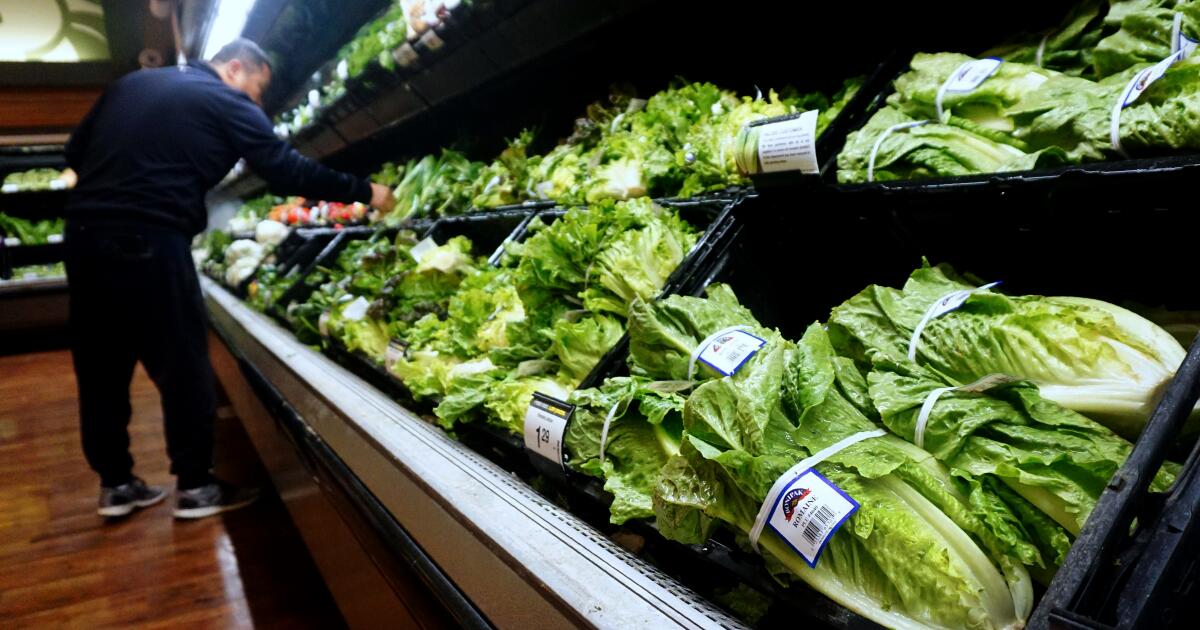
An emergence in parasitic disease cases that can cause a prolonged bout of debilitating diarrhea is prompting growing concerns from public health officials and questions from the public about the safety of fresh produce.
Experts say the risk varies in different parts of the country and that in California, basic washing of produce remains sufficient. California has reported 41 cases of cyclosporiasis this year, but none have been linked to recent multi-state outbreak, according to local public health officials. The situation in other states is more concerning.
Cyclosporiasis is an intestinal illness caused by the miscroscopic parasite Cyclospora cayetanensisaccording to the Centers for Disease Control and Prevention. People contract the illness by consuming food or water contaminated with the feces of an infected person that contained the parasite.
The epicenter of the cyclosporiasis outbreak is in Michigan with the state public health department reporting more than 3,000 cases of the illnessincluding 44 reported cases of hospitalizations.
On Tuesday the Michigan health department said, “available information indicates that lettuce or salad greens may be a potential source of this outbreak,” however, other food items cannot be completely ruled out.
In the US, food-borne outbreaks of cyclosporiasis have been linked to various types of fresh produce imported from Latin America including raspberries, cilantro, basil, snow peas and mixed salad, according to the California Department of Public Health.
At least 34 states have separately reported tens to hundreds of cases of cyclosporiasis this summer.
Since May 1, the CDC has received more than 1,600 confirmed domestic cases and is aware of more than 5,100 cases that require further analysis to confirm the illness as domestically acquired cyclosporiasis.
Officials say the true number of cases is likely higher because some people recover without medical care and are not tested for the parasite.For those who have fallen ill, treatment includes an antibiotic called Bactrim.
“It does result in serious diarrhea, what we call explosive diarrhea, in some patients,” said Dr. Shruti Gohilthe associate medical director of Epidemiology and Infection Prevention at UCI Health. “Other patients may have mild diarrhea, pass it, not even know that they were infected.”
At this time, a specific type of produce, grower or supplier has not been identified as the source of each state outbreak — officials say there could be multiple sources.
One potential source being investigated now is Taco Bell restaurants in the Detriot, Michigan area who told their customers last week the chain was, “currently unable to sell lettuce, cilantro onion, pico de gallo and guacamole due to a nationwide recall,” The Washington Post reported.
But the public doesn’t have to stop consuming fruits and vegetables, Gohil said. Washing produce thoroughly with water or with a produce wash can help reduce the risk of cyclosporiasis infection.
“Washing will reduce the risk. It doesn’t eliminate it, so it’s sort of a numbers game,” said Dr. Charles Bailey, the medical director of infection prevention at Providence St. Joseph and Providence Mission Hospitals in Orange County. “If I were living in Michigan, I think I’d probably not be anxious to be consuming raw fruits or vegetables, you know, for the rest of the summer.”
“We see upticks in the summer routinely, although this is the largest I can remember,” Bailey said.
Cyclosporiasis isn’t a year-round concern in the United States and the outbreak will likely conclude at the end of summer, he said.
“This one I would predict might last longer than previous ones just because of the numbers. It’s got quite a headwind, but you know it’s not something that would become endemic,” Bailey said.
Brandon Brown, an epidemiologist and professor of medicine with the UC Riverside School of Medicine, contracted the illness in 2018 from what he believes was a salad he ate during a trip.
Despite his experience and the multiple outbreaks in other parts of the US, Brown’s advice is, “don’t stop eating your greens because they help keep us alive.”
Brown said he was initially diagnosed with “bad food poisoning” but after multiple visits to urgent care and shedding 20 pounds, the health care team conducted a diagnostic fecal test and discovered Brown had cyclosporiasis.
“Thinking back to 2018, the worst part was the lethargy and not being able to keep food inside me,” he said in a news release. “As someone who exercises every day, I also noticed that I did not have the energy to do that, and I would have to make frequent restroom visits.”
News of cyclosporiasis and the resulting diarrhea have spread widely on social media in recent days with some saying that it could give GLP-1s a run for its money in the weight loss realm.
But, experts say, this is one horribly uncomfortable — and potentially dangerous — way to shed a few pounds. If left untreated, a cyclosporiasis infection can lead to dehydration quickly in the warm summer months, particularly among the elderly, young children and those with a compromised immune system.
“It’s not pleasant,” Gohil said. “The best way to put it is it’s not a good long-term weight reduction strategy.”
Comments are closed, but trackbacks and pingbacks are open.