
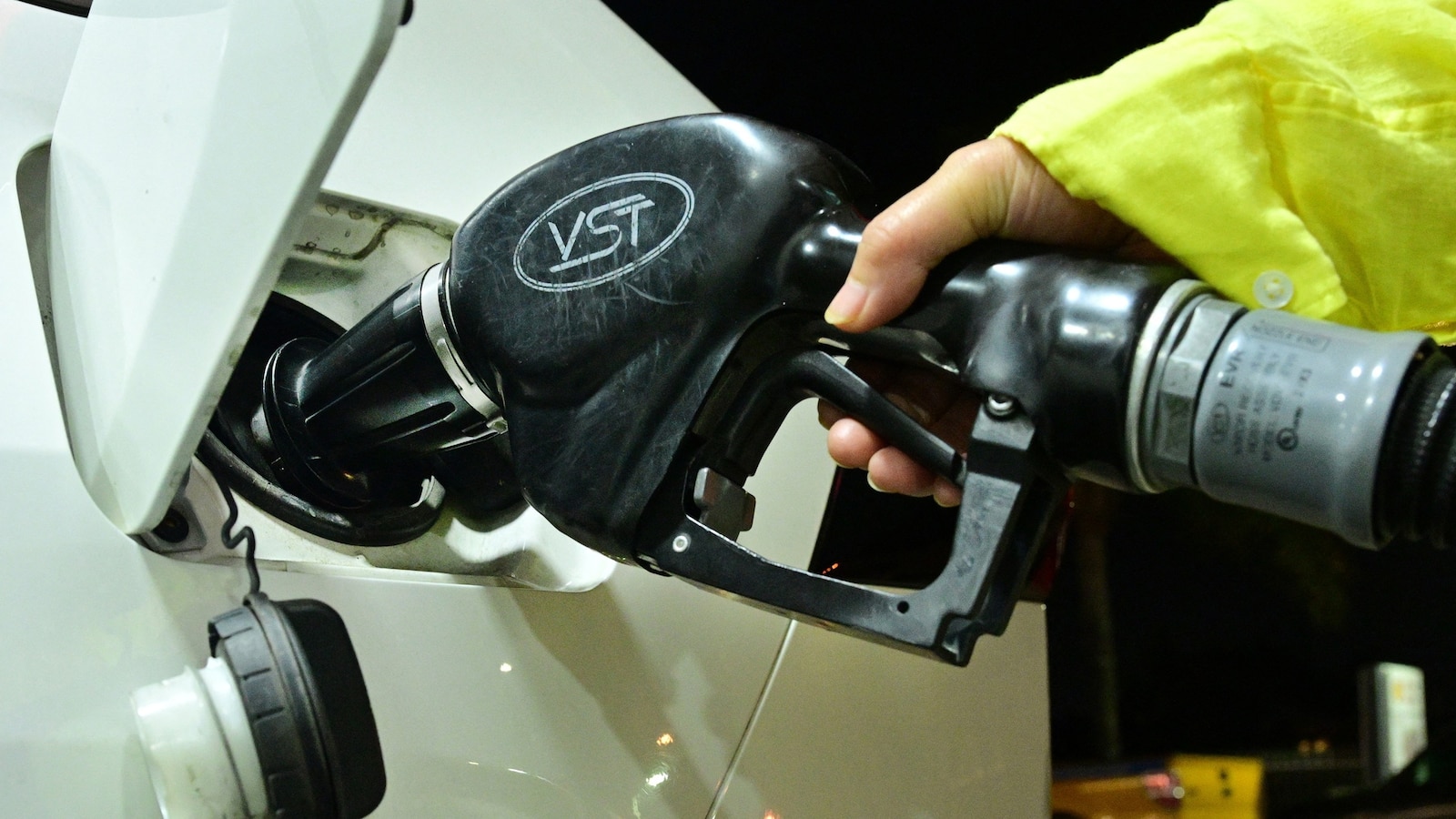
Gas prices in the United States topped $4 per gallon on average Tuesday, crossing the milestone for the first time in nearly four years, just weeks after the US-Israeli war on Iran set off a global oil shock and spiked fuel costs.
Prices at the pump have soared more than 30% since the war began on Feb. 28. AAA data showed. Fuel costs last exceeded $4 a gallon in August 2022 following the Russian invasion of Ukraine.
The Middle East conflict prompted Iranian closure of the Strait of Hormuza maritime trading route that facilitates the transportation of about one-fifth of global oil supply. The risk of a prolonged oil shortage triggered a surge in crude prices.
The US is a net exporter of petroleum, meaning the country produces more oil than it consumes. But since oil prices are set on a global market, US prices move in response to swings in worldwide supply and demand.
Global oil prices hovered around $104 a barrel on Tuesday, which amounted to a nearly 50% price leap from pre-war levels.
Crude oil is the main ingredient in auto fuel, accounting for more than half of the price paid at the pump, according to the federal US Energy Information Administration.

Cargo vessel, Ali 25, in the Gulf, near the Strait of Hormuz, March 22, 2026 in northern Ras al Khaimah, United Arab Emirates.
Getty Images
Fatih Birol, the executive director of the International Energy Agency (IEA), earlier this week said the current oil crisis had surpassed the combined effect of worldwide energy shocks in the 1970s.
The global economy faces a “major, major threat,” Birol said at an event in Canberra, Australia, noting that no country would be “immune to the effects of this crisis if it continues to go in this direction.”
Member nations of the IEA announced two weeks ago that they plan to release 400 million barrels of oil from its strategic reserve, marking the largest oil release in the 32-nation group’s history.
The Trump administration is set to carry out the second-largest-ever delivery from the nation’s emergency reservewhich will make up nearly half of the IEA’s planned release. Trump too eased sanctions on Russian oil and suspended key regulation of domestic oil transportation. The president has also sought to restore tanker traffic in the Strait of Hormuz.
Comments are closed, but trackbacks and pingbacks are open.