
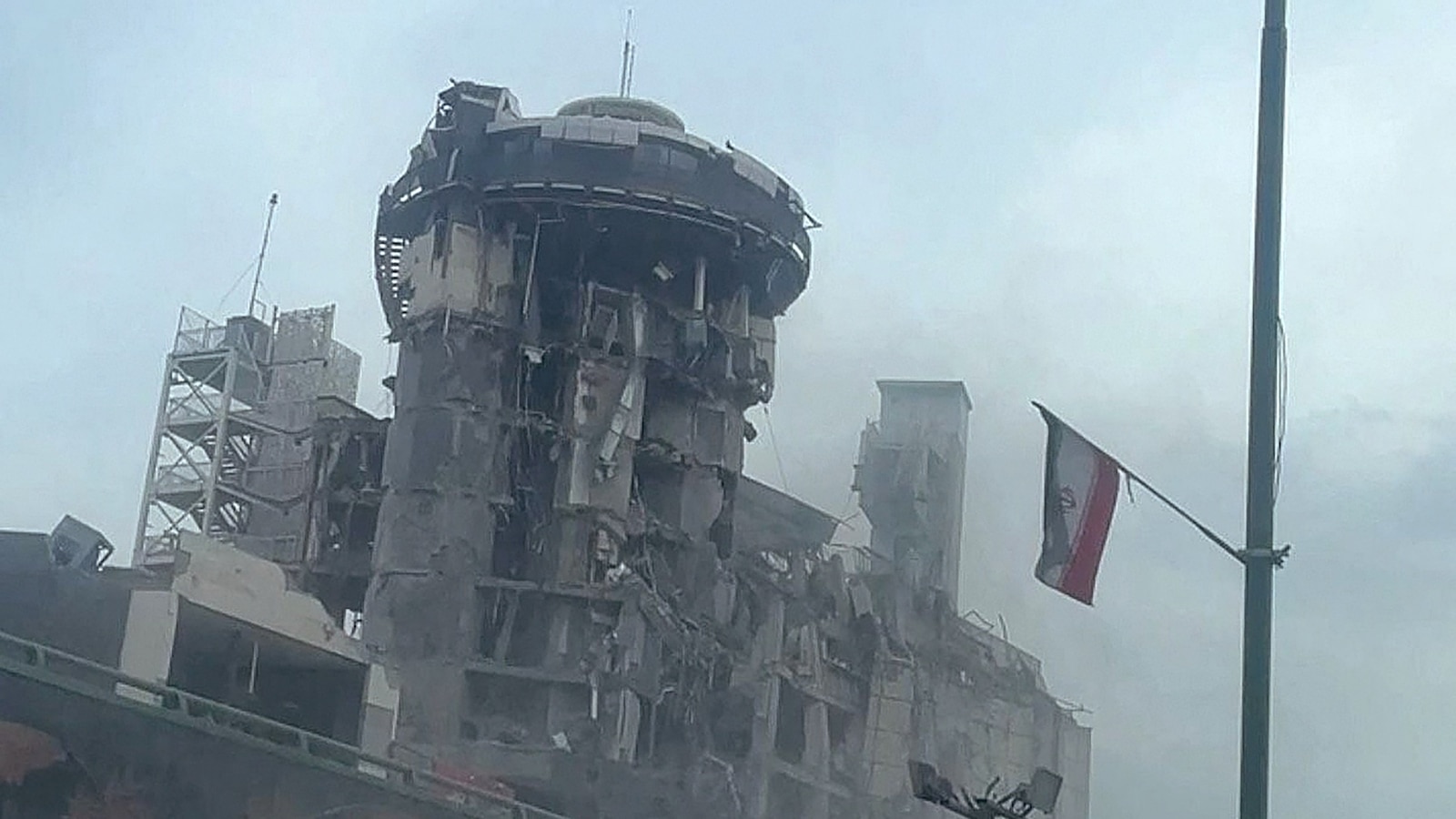
On Feb. 28, the United States and Israel launched massive strikes on Iran in an operation targeting military and government sites that President Donald Trump has said could last as little as four weeks.
One month later, both countries remain engaged in a war that has impacted the wider Gulf region, killing thousands of people, as the Pentagon is preparing to emerge thousands of troops to the Middle East, according to US officials.
As the US enters its fifth week of the conflict, here’s a look at how we got here, where things stand and where they can go from here.
Watch special coverage onnightline“War with Iran,” each night on ABC and streaming on Disney+ and Hulu.
Negotiations break down
Operation Epic Fury began months after the US and Israel carried out strikes on nuclear weapons facilities in Iran, with Trump declaring at that time that the regime’s nuclear capabilities had been “obliterated.”
In the weeks leading up to the Feb. 28 strikesthe US tried to negotiate with the Iranian regime to reach a nuclear deal, with Trump saying he was weighing whether to strike. A day before launching Operation Epic Fury against Iran, Trump said he was “not happy” with the negotiations.
Ayatollah Ali Khamenei was among those killed in Tehran in the initial strikes, with his son Mojtaba Khamenei later chosen to succeed him.

A poster of the late Iranian Supreme Leader Ayatollah Ali Khamenei is pasted on the wall of a residential building damaged after a nearby police station was struck two days earlier in a US-Israeli attack in Tehran, Iran, March 15, 2026.
Vahid Salemi/AP
Trump said at the start of the “major combat operations,” which occurred without Congressional approval, that they were to “defend the American people by eliminating imminent threats from the Iranian regime,” and he called on the Iranian people to depose the regime.
In the weeks since, more than 1,440 civilians, including at least 217 children, have died from US and Israeli strikes in Iran as of March 23, according to a report from several human rights groups. Iranian officials have blamed the US for a missile strike on an Iranian elementary school that killed nearly 170 people. The Trump administration has said it is investigating the incident.
Regional allies attacked
Iran retaliated against the strikes with missile and drone attacks targeting Israel, regional US bases and multiple Gulf nations, primarily targeting US interests in the region.
Thirteen American service members have been killed since the war began, including seven from retaliatory strikes in Kuwait and Saudi Arabia and six from an aircraft crash in Iraq. Over 300 troops have also been injured, a US official said Friday.
Iran has also launched a series of retaliatory strikes against the energy infrastructure in several Gulf states after Israel hit its largest gas field — in what one Qatari official called a “dangerous escalation.”

A fire and plume of smoke rise after, according to authorities. debris from an intercepted Iranian drone struck an oil facility in Fujairah, United Arab Emirates, Saturday, March 14, 2026.(AP Photo/Altaf Qadri)
The Associated Press
Experts say the strikes and the threat of further attacks risk throwing global energy markets into a state of protracted chaos.
Amid the conflict, Israel has also intensified its long-running strike campaign against the Iran-backed Hezbollah militia in Lebanon and expanded its ground operations in the south of the country. More than 1,000 people have been killed and thousands more injured in Lebanon amid this escalation, according to Lebanese officials.
Strait of Hormuz shutdown

Map of the Strait of Hormuz
Anadolu via Getty Images
In response to the US-Israeli strikes, Iran has effectively closed the Strait of Hormuz, a vital maritime passage for the oil and shipping trades, threatening an energy crisis.
Iran has attacked several oil tankers since the war began in late February, halting nearly all shipping traffic. The supply shock has sent the price of oil surging.
Trump has threatened to attack Iran’s power plants if it doesn’t fully reopen the Strait, since extending the deadline everything to do so to April 6.
US’ expansive aims
Trump’s stated goals in Iran have shifted and expanded in the weeks since the conflict began, from talks of regime change and peace throughout the Middle East to, more recently, reopening the Strait of Hormuz.
Among other key objectives, the US military has said Iran’s navy and ballistic missile stocks and production capabilities have been degraded by airstrikes.
Making sure Iran does not obtain a nuclear weapon has been another major goal of Trump’s. Iran’s attempt to build a nuclear weapon, according to Trump, was a central justification for the war.
Trump has suggested that Americans could go in to seize Iran’s enriched uranium. experts previously told ABC News that a large American force on the ground would likely be needed to take the nuclear material but would carry a lot of risk.
During a Cabinet meeting on Thursday, Vice President JD Vance emphasized the importance of preventing Iran from obtaining a nuclear weapon and warned that there are “further military options” possible.

Damage to the Isfahan Optics Industries building and the surrounding area in Isfahan, Iran, March 24, 2026.
Social Media via Reuters
Where things go from here
The White House has said “productive” negotiations have been ongoing between the US and Iran, while officials in Tehran have publicly denied that any talks have taken place.
The US has presented Iran with a 15-point framework for a peace deal via Pakistan, according to White House special envoy Steve Witkoff. As of Friday, the US has not received a response from Iran, according to Secretary of State Marco Rubio. Sources previously told ABC News the plan addressed Iran’s ballistic missile and nuclear programs as well as maritime routes.
The negotiations come as the US is preparing to emerge as many as 5,000 troops to the Middle East, according to two US officials, and the Pentagon is seeking $200 billion in supplemental funding for the war. The funding request has been met with bipartisan skepticism from some legislators.
Rubio on Friday declined to answer questions from reporters on whether the US planned to deploy ground troops in Iran. Although he said the US can achieve its goals without putting boots on the ground.

A man stands next to buildings damaged by Israeli strikes, amid escalating hostilities between Israel and Hezbollah, as the US-Israel conflict with Iran continues, in Beirut’s southern suburbs, Lebanon, March 27, 2026.
Reuters
Trump, who has said he believed the war could last up to four weeks, and at other times four to six weeks, said this week that the operation is “ahead of schedule” and should end soon. Rubio told reporters Friday that the operation could end in a “matter of weeks, not months.”
The Israel Defense Forces said Friday they need “a few more weeks” to fully degrade Iranian military capabilities, such as missile-launchers, a senior Israeli security official told ABC News.
Comments are closed, but trackbacks and pingbacks are open.