
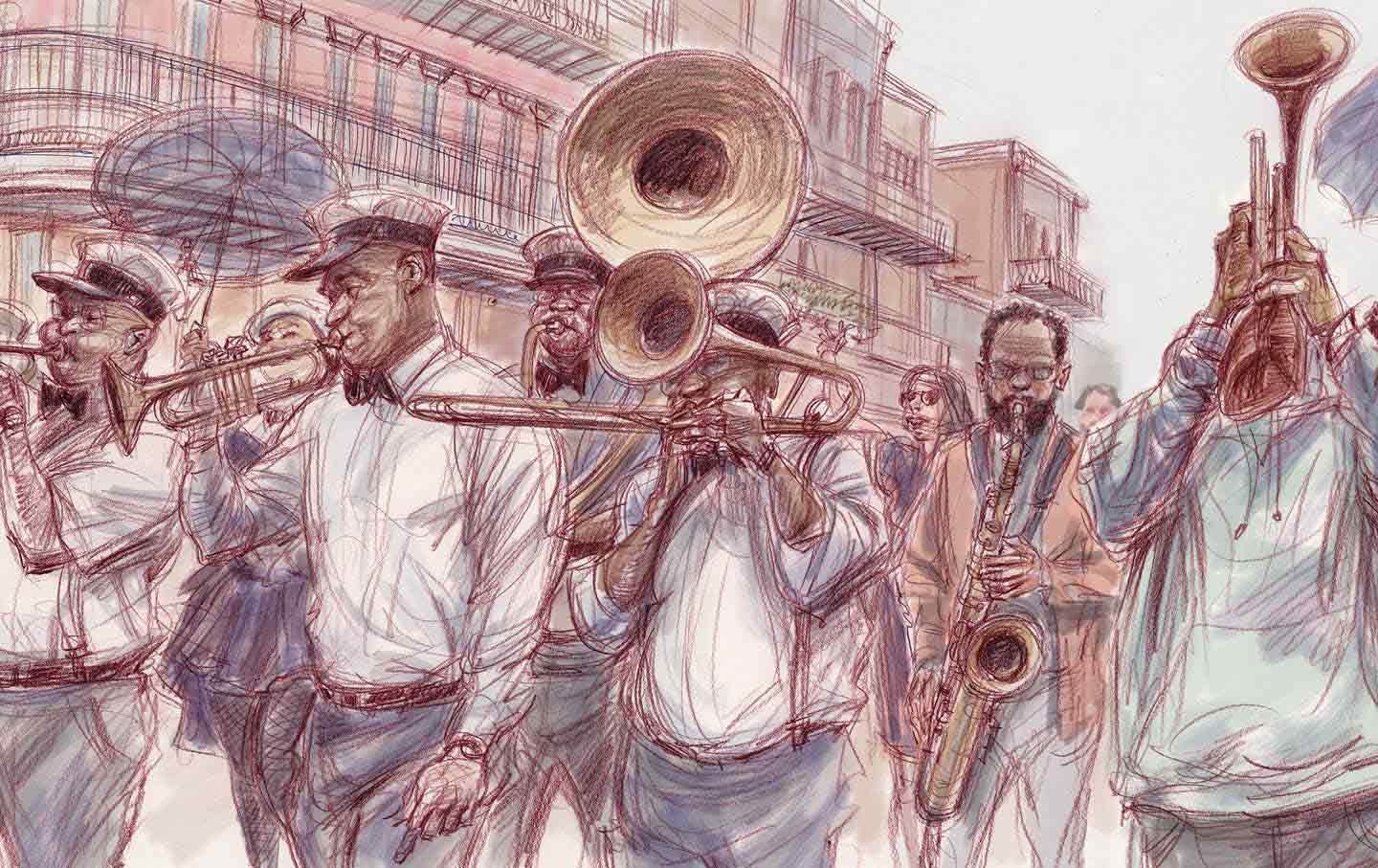
Twenty years after Katrina, the cultural workers who kept New Orleans alive are demanding not to be pushed aside.
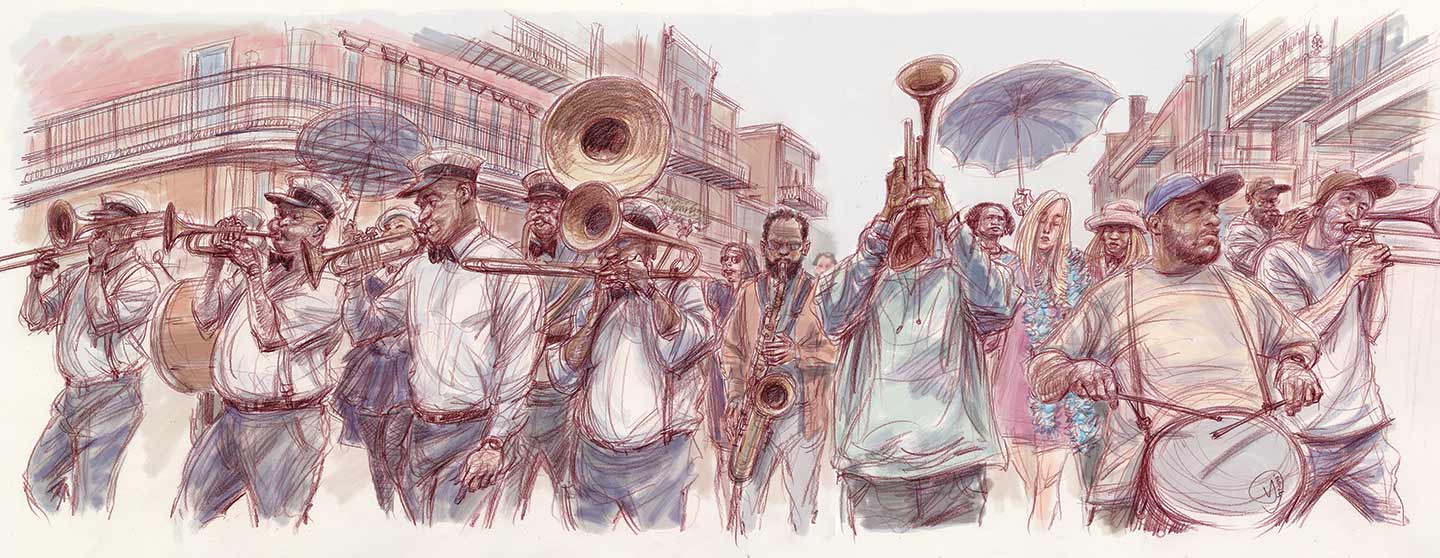
Some people celebrated renewal. Some mourned loss. Still others just hoped for the comfort of a regular day. One word—resilience—kept popping up. That day—August 29, 2025—marked 20 years since the city of New Orleans was flooded after a series of levee failures in the wake of Hurricane Katrina. The floods, which submerged 80 percent of the city, killed more than 1,400 people and displaced hundreds of thousands. New Orleanians still struggle to make sense of the catastrophe. They still yearn for what New Orleans once was, and dream of what it should become.
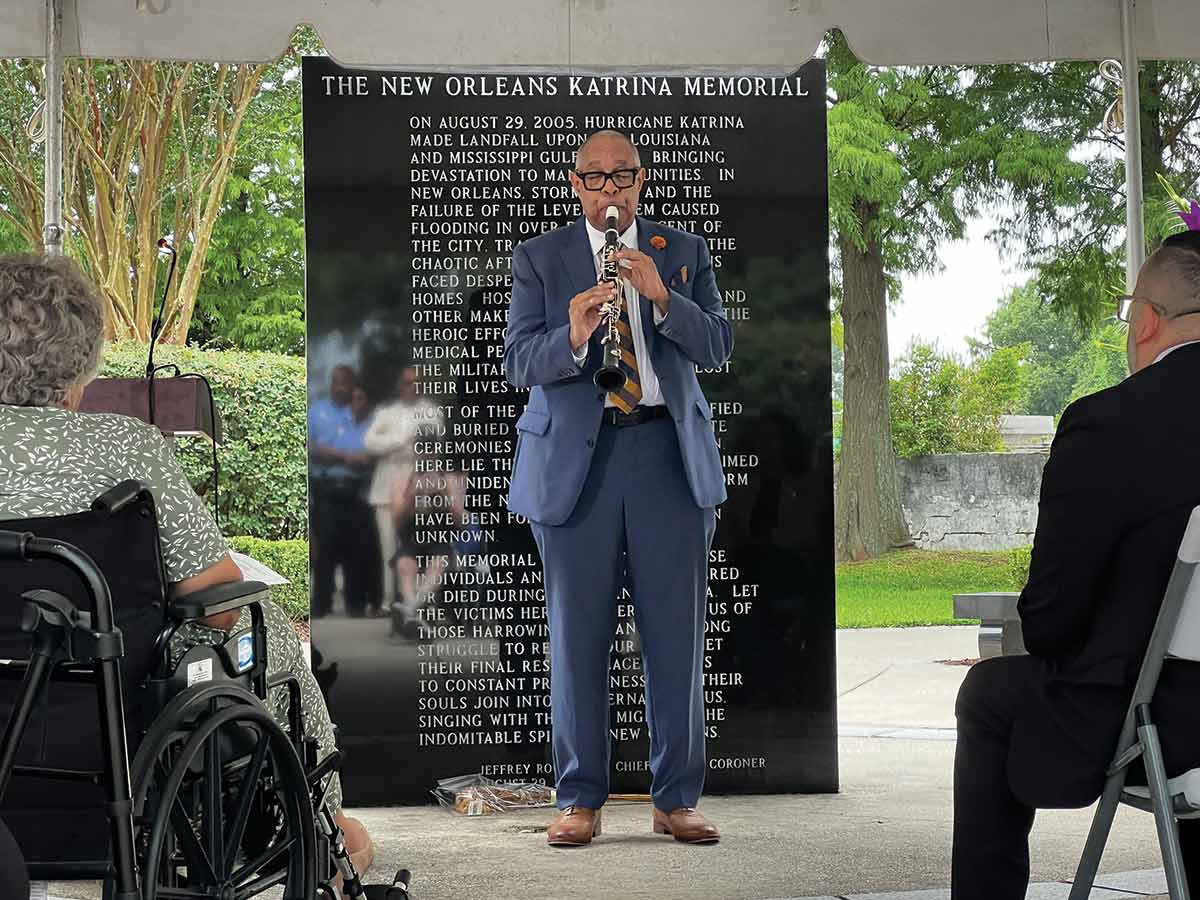
On that day, at 8:29 am—precisely when, in 2005, the Industrial Canal’s concrete floodwall broke, letting loose the torrent that inundated the Lower Ninth Ward—a small group gathered for the annual wreath-laying ceremony at Charity Hospital Cemetery No. 1. Standing in the middle of the Hurricane Katrina Memorial, in front of three mausoleums that hold the remains of 86 unclaimed or unidentified flood victims, Michael White raised his clarinet. Behind him was a black marble tablet inscribed with white letters hailing “the indomitable spirit of New Orleans.” White, a celebrated musician and cultural historian who began playing at funerals and parades as a member of brass bands led by the trumpeter Ernest “Doc” Paulin and the banjoist-guitarist Danny Barker, performed a solo rendition of the hymn “We’ll Understand It Better, By and By.” He leaned into a gently swinging rhythm, bending notes and alternating between sweet and wailing tones. He did what musicians here have done for at least a century, especially at funerals: distill meaning and truth through traditional jazz.
Little in New Orleans is as singular as its culture—except maybe its politics. Ray Nagin, the city’s mayor when Katrina hit, was indicted in 2013 on 21 corruption charges; he completed his sentence last year. At the Katrina Memorial this past August, Mayor LaToya Cantrell, then nearing the end of her second and final term, was making her first public appearance since her federal indictment on charges of using public funds to facilitate a romantic relationship with her bodyguard, a city police officer. She nevertheless stood proudly at the podium. “New Orleans is still here,” she said. She spoke of “toiling and giving, being selfless and sacrificing whatever necessary to ensure that New Orleans came back better and stronger than ever before.”
The night before, Howard Miller, a different sort of city leader, sat among seven panelists at the New Orleans Jazz Museum in a public forum on “The State of New Orleans Culture: 20 Years After Katrina.” Miller is Big Chief of Creole Wild West, one of the Black Masking groups, often referred to as Mardi Gras Indians, whose chants, hand-drummed beats, and elaborate feathered-and-beaded suits have been a fixture of neighborhood life, and an influence on popular music, for generations. “We were promised a bigger and better New Orleans,” Miller said. “A lot of us came back only to find out the hard way that it’s not better for us.”
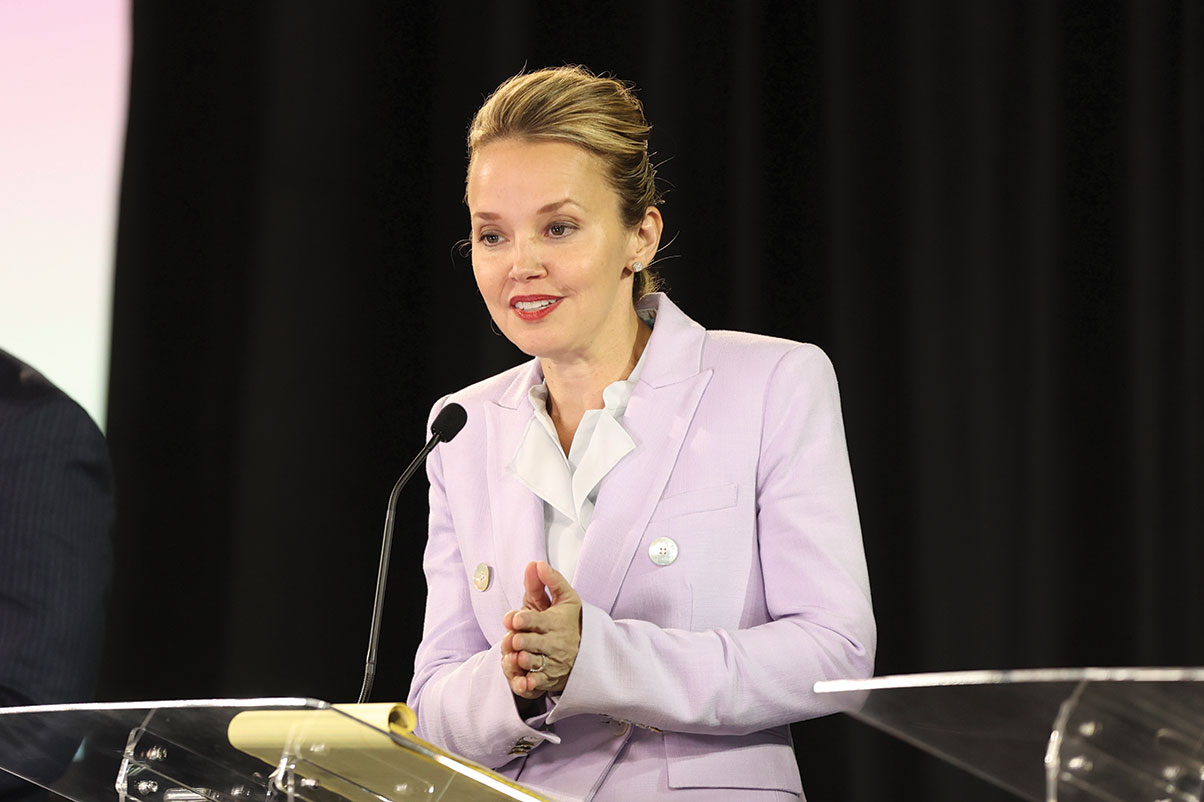
On October 11, New Orleans got a new leader. Helena Moreno, the Democratic vice president of the City Council, was elected mayor with 55 percent of the vote, outpacing her nearest rival by 33 points. During her campaign, Moreno had devoted considerable attention to quality-of-life concerns, especially the city’s shortage of affordable housing and its notoriously crumbling roads. “I really hope that you are not weary,” she told a jubilant crowd during her acceptance speech, “because the hard work is actually just ahead.”
According to New Orleans & Company, the “official sales and marketing organization for New Orleans’s tourism industry,” things are on the upswing: More than 19 million visitors spent a record $10 billion last year. Yet the city’s pothole-strewn streets make it seem more like Havana than a modern Southern metropolis. No matter how things look from the top, New Orleanians are weary. And for those who have made it their life’s work to carry on the city’s cultural traditions, that feeling is a familiar one.
Current Issue
Allen Toussaint, the hit-making New Orleans pianist-composer-arranger-producer who died in 2015, once said that the city has its own distinct hum: “B-flat all the way.” New Orleans shares endemic problems with other cities—budget deficits, failing infrastructure, racial divides, corruption. Yet it is also unique, and largely so because of its local culture, developed by a population that, prior to Katrina, featured the highest percentage of native-born residents of any American city. Here, past traumas, present indignities, and future hopes are best understood through that culture.
In early 2006, I traveled to New Orleans to write about the city’s cultural community in the wake of the flood. Back then, Michael White was still living in temporary housing in Houston and commuting to New Orleans’s Xavier University, where he held an endowed professorship; he’d lost his home and, with it, a museum’s worth of recordings and memorabilia from the jazz legends who’d mentored him. “There’s a feeling among many that some of our older cultural institutions, like parades and jazz funerals, are in the way of progress and don’t fit in the new vision of New Orleans,” he told me when we first spoke. “The message is that these traditions should only be used in a limited way to boost the image of New Orleans, as opposed to being real, viable aspects of our lives.” That feeling hasn’t changed.
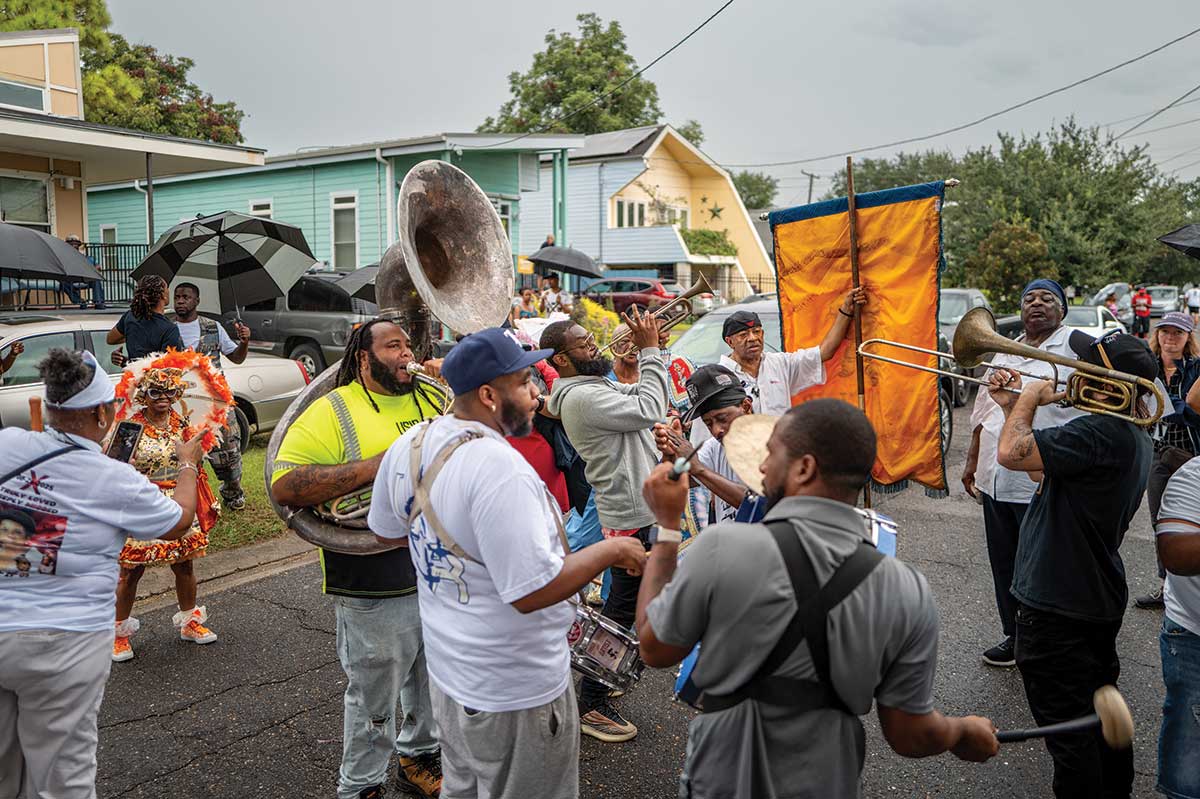
“We’re dealing with lost promises,” Tamara Jackson, another panelist at the Jazz Museum, said from the stage in August. “Twenty years ago, our culture was under attack, and 20 years later, it is still under attack.” Jackson is the founder and president of VIP Ladies & Kids, one of the dozens of groups known as Social Aid & Pleasure Clubs whose Sunday “second-line” parades are essential neighborhood gatherings; she is also the president of the Social Aid & Pleasure Club Task Force, which advocates for these groups in the face of restrictive regulations and seemingly punitive fees. Three weeks earlier, Jackson had organized a “Save Our Secondline Culture” rally. Some 50 club members danced to insistent beats and horn-section calls from the New Groove Brass Band. At issue were daunting new insurance requirements, announced just before the start of parade season. “We are asking for clarity, but also for respect,” she said.
I first met Jackson in 2007, when a consortium of clubs took the city to federal court, protesting a near-tripling of police security fees for parades. Given that footage of those first post-flood parades appears in nearly every documentary on Katrina, the circumstance seemed a cruel joke. “Should the law not be enjoined,” read the complaint filed in Social Aid & Pleasure Club Task Force v. City of New Orleans, “there is very little doubt that plaintiff’s cultural tradition will cease to exist.” Nothing ceased. Yet Katie Schwartzmann, an attorney who represented the clubs, told me recently, “It’s incredibly frustrating and striking to see a culture that we cherish back in the crosshairs, fighting in much the same way it had to in the wake of the flood after Hurricane Katrina.”
If there has been a culture war in the city these past 20 years, that’s hardly news. In 1918, a New Orleans Times-icayune editorial about a then-nascent jazz culture declared, “We should make it a point of civic honor to suppress it.” This year, a city-sponsored “Katrina 20” symposium started with the Free Agents Brass Band marching through Gallier Hall, playing “Just a Closer Walk With Thee” as if at a funeral procession. In 2007, I first met the band’s bass drummer, Ellis Joseph, in the Tremé neighborhood. He’d been marching in the funeral procession for a fellow musician when a new resident in the neighborhood called the police, who promptly busted up the memorial and arrested two musicians for “disturbing the peace.” “They came in a swarm, like we had AK-47s,” Joseph told me then. “But we only had instruments.”
Yet this culture preserves the peace. A recent report from the nonprofit Data Center, “The Politics of Resilience: Civic Engagement in New Orleans 20 Years After Katrina,” emphasized the galvanizing effects of Social Aid & Pleasure Clubs and Black Masking groups. “To external observers, this activity might appear frivolous,” it read. “These traditional organizations, however, have historically served not only a recreational purpose, but also as social support networks.”
These are primarily Black communities, and they are shrinking. When I began documenting post-Katrina New Orleans, the poet and activist Amiri Baraka told me that then-President George W. Bush, whose administration had been suspiciously slow to respond to the devastating flooding in the city, “wants to make New Orleans shriveled and colorless.” The city now has 120,000 fewer Black residents than it did before the flood. In the Tremé, long a hothouse for local jazz culture, the Black population has dropped from more than 90 percent in 2000 to roughly 57 percent today. The displacement of residents from tightly knit neighborhoods to outlying areas, mostly because of steeply rising rents, threatens not just this culture but its context.
During the 20th-anniversary commemoration, I spoke with Bruce “Sunpie” Barnes, a charismatic musician who has played professional football, been a park ranger, and is perhaps best known around town as Big Chief of the Northside Skull and Bone Gang, whose members go door-to-door each Mardi Gras morning waking up the neighborhood and, as he put it, “spreading a message of peace.” “A lot of things washed away since the storm,” Barnes told me. “Libraries of information—the real libraries, the ones that exist in our minds and hearts, the ephemeral knowledge that defines what our culture really is.”
The Katrina 20 symposium bore a slogan: “Resilient. Evolved. Empowered.” But as public-interest attorney Tracie Washington, who spoke forcefully at an August 29 gathering in front of the Industrial Canal floodwall, explained, resilience has become a dirty word. When I’d visited the city in 2010 for the flood’s fifth anniversary, signs tacked to lampposts grabbed a quote of hers from a TV interview: “Stop calling me RESILIENT. Because every time you say, ‘Oh, they’re so resilient,’ that means you can do something else to me.”
In his autobiography, Treat It Gentle, the great New Orleans clarinetist and soprano saxophonist Sidney Bechet wrote of “the remembering song,” which referred to a philosophy about cultural memory in the city and its liberating effect. This year, some of my closest friends in New Orleans didn’t want to think about an anniversary. Before I left town, I visited Ben Jaffe, the bassist and sousaphonist who since 1993 has run Preservation Hall, which was pioneered by his parents, Allan and Sandra Jaffe, more than a half-century ago. He winced when I mentioned Katrina, but then said, “I believe that anniversaries are important. That’s something that I grew up with, that musicians taught me—the idea that you have to repeat certain information, or else its meaning gets lost.”
Later that night, I came back to hear the Preservation All-Stars, led by the drummer Shannon Powell. I’ll never forget how, months after the flood, with the city not yet half-alive, Powell led jam sessions at the beloved and now-defunct Donna’s Bar & Grill. Some musicians had driven from Atlanta or Houston to make the gig. They needed the money, sure, but most of all they needed to play for their hometown crowd. Powell, who lives in the heart of the Tremé, suffered a heart attack and a stroke a year ago and now uses a walker to get to the stage. He has only limited use of his left hand. Yet at Preservation Hall, he didn’t miss a beat: His soft snare-drum rolls were as elegant as ever, his bold bass-drum kicks like declarations of authority. And for those listening closely, echoes of parade beats and Black Masking–group chants were embedded within his rendition of “Royal Garden Blues.” This wasn’t just a demonstration of resilience; it was a New Orleanian who had weathered the storm, who remembers not just the flood but all that came before it.
Helena Moreno, to her credit, defended the Social Aid & Pleasure Clubs regarding the insurance dustup in the run-up to the mayoral election. But for the second time in a row, New Orleans has a mayor “from away,” as they say here (Moreno was born in Xalapa, Mexico, and grew up mostly in Texas). During her victory speech, Moreno said she was “ready to take our city in a new direction.” Whatever promise that may hold, it is different from remembering. Regardless of her intentions, Moreno will be challenged by a fiscal crisis that one City Council member called, without irony, “a perfect storm.” The city’s cultural community fears that once the budget is drawn up, the recent promises of support will end up on the cutting-room floor.
The singular culture of New Orleans was born of resistance and, on some fundamental level, lives in opposition to authority. That is its remembering song. And yet it holds the keys to building coalitions. As the Moreno administration seeks a new direction, it would do well to listen to the past, and to invite to the table those who lived through it. If not, that next brass band may not find its community on a street corner. Shannon Powell might be the last of his kind. And this city like no other will start sounding and feeling more like everywhere else.
In this time of unrelenting, often unprecedented cruelty and lawlessness, I’m grateful forNation readers like you.
So many of you have taken to the streets, organized in your neighborhood and with your union, and showed up at the ballot box to vote for progressive candidates. You’re proving that it is possible—to paraphrase the legendary Patti Smith—to redeem the work of the fools running our government.
And as we head into 2026, I promise thatThe Nation will fight like never before for justice, humanity, and dignity in these United States.
At a time when most news organizations are either cutting budgets or cozying up to Trump by bringing in right-wing propagandists,The Nation’s writers, editors, copy editors, fact-checkers, and illustrators confront head-on the administration’s deadly abuses of power, blatant corruption, and deconstruction of both government and civil society.
We couldn’t do this crucial work without you.
Through the end of the year, a generous donor is matching all donations toThe Nation’s independent journalism up to $75,000. But the end of the year is now only days away.
Time is running out to have your gift doubled. Don’t wait—donate now to ensure that our newsroom has the full $150,000 to start the new year.
Another world really is possible. Together, we can and will win it!
Love and Solidarity,
John Nichols
Executive Editor, The Nation
More from The Nation
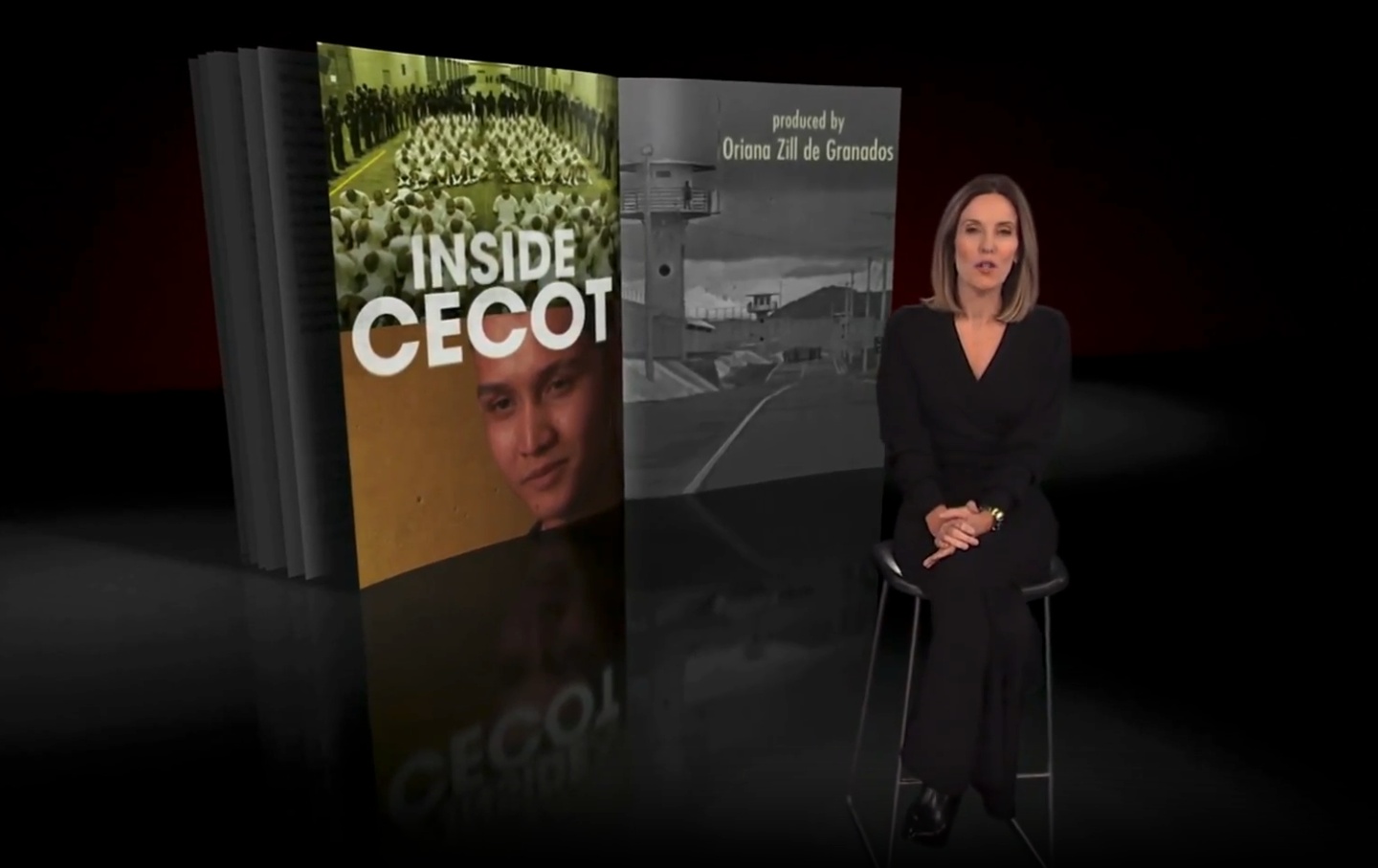
A transcript of the 60 Minutes segment on CECOT, the notorious prison in El Salvador.
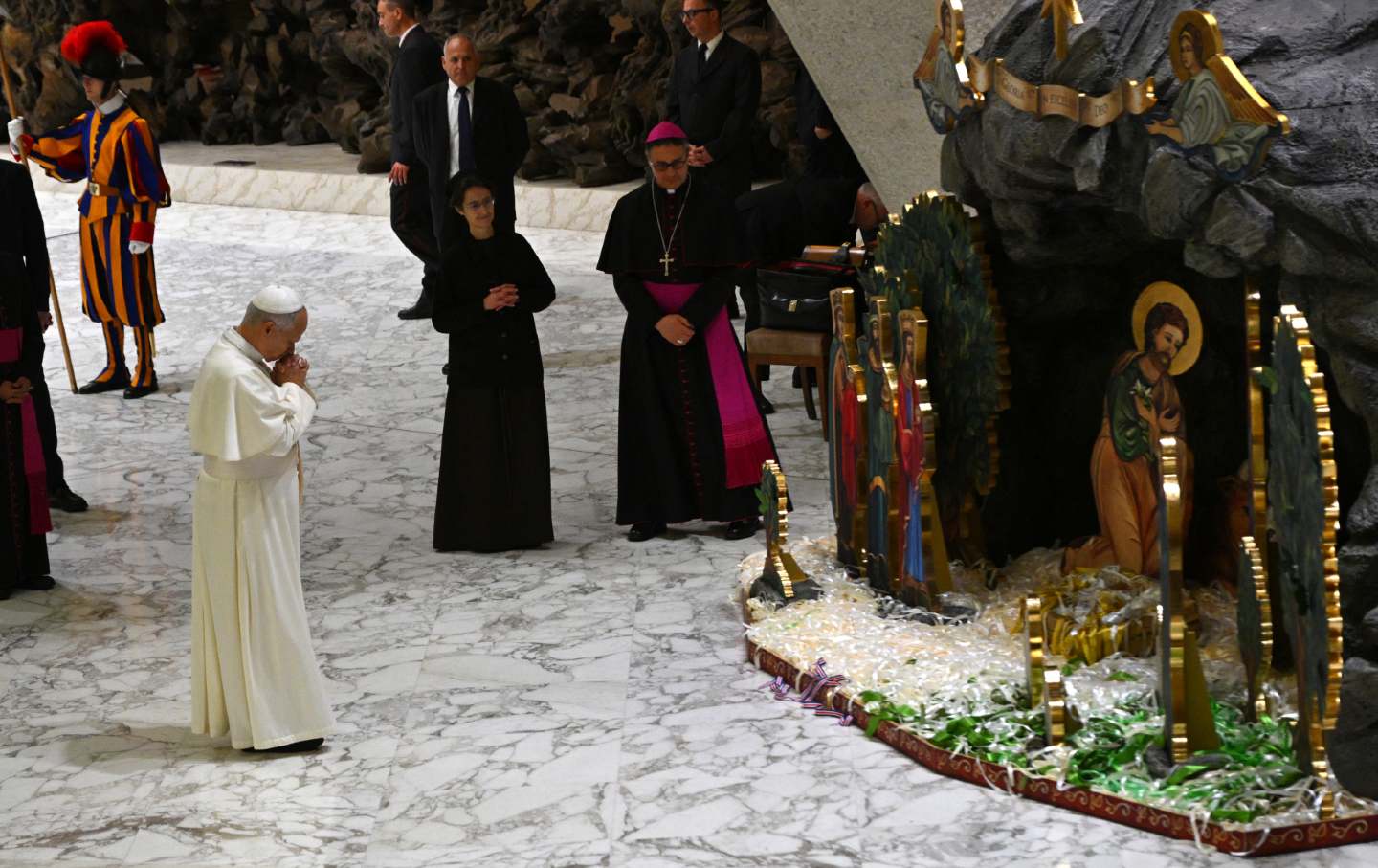
John Fugelsang and Pope Leo XIV remind us that Christian nationalism and capitalism get in the way of the message of the season.

A tribute to Nation family we lost this year—from Jules Feiffer to Joshua Clover, Elizabeth Pochoda, Bill Moyers, and Peter and Cora Weiss
Under the Trump administration’s anti-DEI directives, colleges would be forced to abandon gender balancing, disadvantaging men.
The author and cartoonist explains why we should dismantle the nuclear family and build something bigger.
The new editor in chief at CBS News has shown she’s not merely stupendously unqualified—she’s ideologically opposed to the practice of good journalism.
Comments are closed, but trackbacks and pingbacks are open.